




What's Happening?
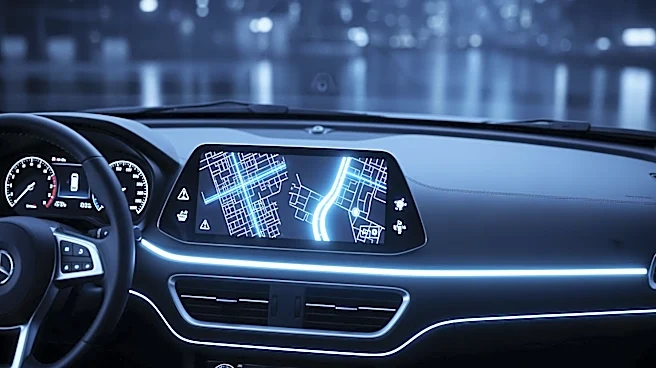
Tesla's Full Self-Driving (FSD) system is under scrutiny following reports from vehicle owners about safety issues. Despite CEO Elon Musk's claims that unsupervised autonomous driving is imminent, some Tesla owners have reported incidents where their
vehicles, equipped with the latest driver-assist software, have collided with stationary objects. One incident involved a 2023 Model X scraping a pole during a Smart Summon session, while another involved a vehicle scraping a garage entrance. These reports challenge Tesla's narrative of an impending autonomous driving future and highlight the gap between current capabilities and fully reliable autonomous operation.
Why It's Important?
The reports of safety issues with Tesla's FSD system raise concerns about the readiness of autonomous driving technology for widespread use. The potential for accidents, even at low speeds, can lead to costly repairs, insurance claims, and safety risks. This situation underscores the importance of rigorous testing and validation of autonomous systems before they are deployed on a large scale. For Tesla, these challenges could impact consumer trust and the company's reputation as a leader in autonomous driving technology. The broader industry may also face increased scrutiny and regulatory pressure to ensure the safety and reliability of autonomous vehicles.
What's Next?
Tesla and other automakers will likely continue to refine their autonomous driving technologies, addressing safety concerns and improving system reliability. Regulatory bodies may impose stricter standards and testing requirements for autonomous vehicles to ensure public safety. Consumers considering advanced driver-assist packages should remain informed about the limitations and safety features of these systems. As the technology evolves, ongoing dialogue between manufacturers, regulators, and consumers will be essential to navigate the complexities of autonomous driving.