
What's Happening?
Mercedes-Benz has announced a shift in its vehicle design strategy by reintroducing physical buttons in its latest models, moving away from the previously dominant touchscreen interfaces. This decision
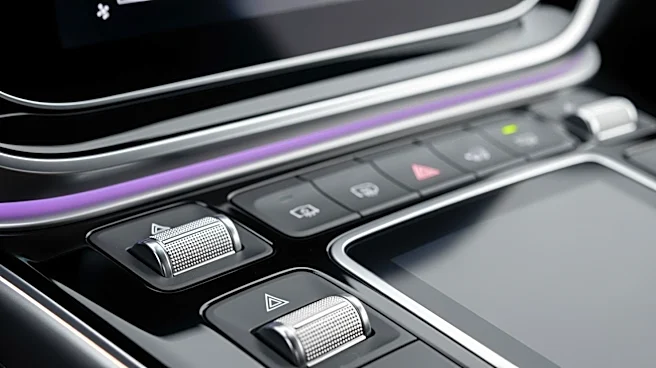
comes after feedback and real-world data indicated that touchscreens, while innovative, often require more visual attention from drivers, potentially compromising safety. The MBUX Hyperscreen, a large digital interface that centralized vehicle functions, was initially seen as a futuristic advancement. However, drivers found that physical controls, such as dials and buttons, allow for easier and safer adjustments while driving. Mercedes' software chief, Magnus Östberg, acknowledged that physical buttons are more ergonomic based on usage data. The company aims to balance digital convenience with intuitive operation by incorporating redesigned rollers, switches, and tactile buttons in models like the GLC and CLA Shooting Brake.
Why It's Important?
The reintroduction of physical controls by Mercedes highlights a significant shift in automotive design philosophy, emphasizing driver safety and usability over minimalistic digital interfaces. This change is crucial as it addresses growing concerns from safety organizations like Euro NCAP, which have warned about the distractions caused by complex touch interfaces. By ensuring that critical vehicle functions are easily accessible through physical controls, Mercedes is prioritizing driver focus and reducing the risk of accidents. This move could influence other automakers to reconsider their design strategies, potentially leading to an industry-wide reevaluation of the balance between digital and physical controls in vehicles. The decision also reflects a broader trend where consumer feedback and safety considerations are increasingly shaping product design in the automotive sector.
What's Next?
As Mercedes implements these changes, other car manufacturers may follow suit, especially with Euro NCAP's updated safety protocols coming into effect in 2026, which will require dedicated physical controls for key functions. This could lead to a resurgence of physical buttons across the industry, as companies strive to meet safety standards and consumer preferences. Additionally, the automotive industry might see a diversification in design approaches, with some brands continuing to innovate with digital interfaces while others emphasize traditional controls. The ongoing debate between innovation and usability will likely drive further research and development in creating interfaces that enhance both safety and user experience.