
What's Happening?
The global Controlled Environment Agriculture (CEA) market is expected to grow significantly, reaching USD 271.01 billion by 2032, according to DataM Intelligence. This growth is driven by climate volatility,
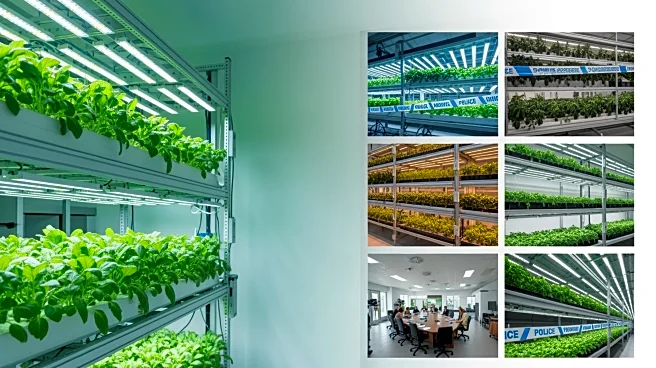
urbanization, and advancements in smart farming technologies. CEA allows for year-round, high-yield food production that is independent of external weather conditions, addressing challenges such as climate uncertainty, water scarcity, and supply-chain disruptions. The market is segmented by facility type, crop, technique, and end-user, with greenhouses and vertical farms being prominent facility types. Leafy greens dominate the crop segment due to their short growth cycles and high urban demand.
Why It's Important?
The expansion of the CEA market is crucial as it addresses the increasing challenges faced by traditional agriculture, such as extreme weather conditions and urban food demand. By providing a stable and efficient method of food production, CEA supports global food security and urban resilience. The U.S. is a leading market, driven by investments in ag-tech and automation, and is expected to maintain its leadership position. The growth of CEA also aligns with sustainability goals, reducing logistics costs and spoilage by enabling local production close to consumption centers.
What's Next?
As the CEA market continues to grow, it is expected to become a core component of global food systems by 2030. The focus will be on increasing automation and AI-driven crop management to enhance productivity and cost control. The U.S. market is projected to exceed USD 95 billion by 2032, with significant investments in technology adoption and scale. The continued development of CEA will likely lead to more sustainable and resilient food systems, addressing both environmental and urban challenges.