


What's Happening?
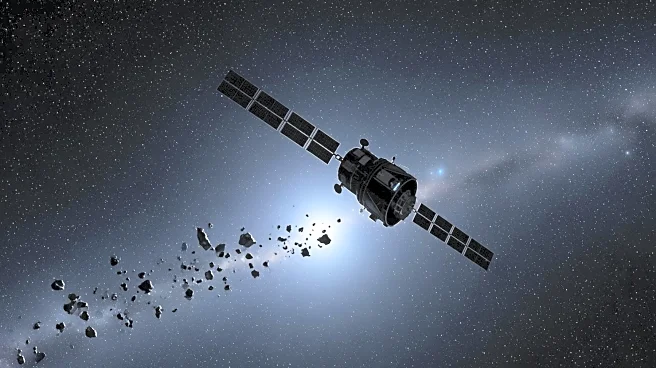
SpaceX has reported losing contact with one of its Starlink satellites, designated as satellite 34343, which was launched in May 2025. The satellite experienced an 'anomaly' while orbiting approximately 560 kilometers above Earth, leading to the ejection
of debris into space. This incident is reminiscent of a similar event in December involving another Starlink satellite. SpaceX has assured that the satellite poses no threat to the International Space Station or other missions, but it is actively monitoring the situation along with any trackable debris. LeoLabs, a company that tracks satellite constellations, detected multiple objects around the satellite, suggesting a possible breakup. The cause of the anomaly is believed to be an internal energetic source rather than a collision. SpaceX is investigating the root cause and plans to implement corrective actions.
Why It's Important?
The loss of contact with the Starlink satellite and the resulting debris highlight ongoing concerns about space safety and the management of orbital debris. With SpaceX operating over 10,000 active satellites and planning to launch up to 1 million more, the potential for increased space traffic and debris poses risks to other satellites and space missions. The incident underscores the need for effective space traffic management and debris mitigation strategies. Additionally, the event may impact SpaceX's reputation and its ambitious plans for expanding its satellite network, which has faced criticism from astronomers and environmentalists over potential light pollution and orbital safety risks.
What's Next?
SpaceX is expected to continue its investigation into the anomaly to prevent future incidents. The company may also face increased scrutiny from regulatory bodies and the scientific community regarding its satellite operations and debris management practices. As SpaceX aims to expand its satellite constellation, it will need to address these concerns to maintain its position in the space industry. The incident may also prompt discussions on international regulations and cooperation for space traffic management and debris mitigation.