

What's Happening?
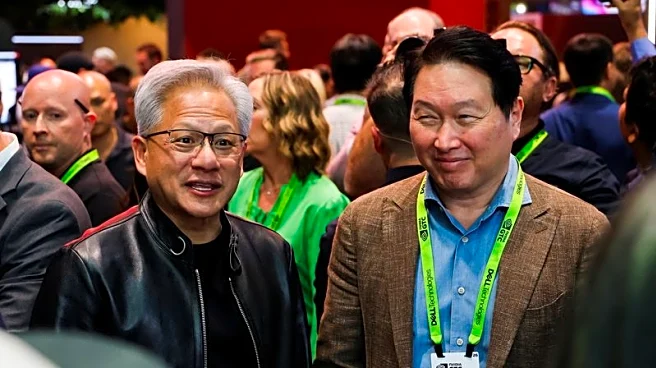
IntBot Inc., a startup based in Sunnyvale, California, has rapidly developed full-body humanoid robots that are now operational in various real-world settings, including NVIDIA's GTC and hotel lobbies. The company has focused on creating a social intelligence
engine, IntEng, which utilizes 24/7 interaction footage and sentiment analysis to enhance robot-human interactions. This engine is designed to be hardware-agnostic, allowing it to be integrated with multiple humanoid and service robots from different vendors. At the GTC 2026, IntBot showcased the integration of NVIDIA's Cosmos Reason-2 vision-language model, enabling robots to understand and interpret complex human environments in real-time. The robots, such as Nilo, are deployed in hotels across the U.S., functioning as multilingual concierges that work alongside human staff, enhancing the service experience through natural interactions.
Why It's Important?
The development of socially intelligent humanoid robots by IntBot represents a significant shift in the robotics industry, focusing on interaction quality rather than just physical capabilities. This approach could redefine how robots are integrated into everyday environments, potentially increasing their acceptance and utility in public and commercial spaces. By prioritizing social intelligence, IntBot aims to overcome the limitations of previous robotic systems that struggled in dynamic, noisy environments. This innovation could lead to broader adoption of humanoid robots in sectors like hospitality, customer service, and beyond, offering businesses new ways to enhance customer engagement and operational efficiency.
What's Next?
IntBot plans to expand the deployment of its humanoid robots to more locations, potentially increasing their presence in various industries. The company's focus on hardware-agnostic software could attract partnerships with other robotics manufacturers, broadening the application of its social intelligence engine. As these robots become more prevalent, there may be increased scrutiny and discussion around the ethical implications of humanoid robots in public spaces, particularly concerning privacy and data security. Stakeholders, including businesses and regulatory bodies, will likely engage in dialogues to address these concerns while exploring the potential benefits of such technology.
Beyond the Headlines
The introduction of socially intelligent robots raises questions about the future of human-robot interaction and the potential cultural shifts it may bring. As robots become more integrated into daily life, there could be changes in how society perceives and interacts with technology. This development also highlights the importance of designing robots that can seamlessly blend into human environments, emphasizing the need for ongoing research in social robotics and artificial intelligence. The success of IntBot's approach could inspire other companies to prioritize social intelligence in their robotic solutions, potentially leading to a new era of human-centric technology.