






What's Happening?
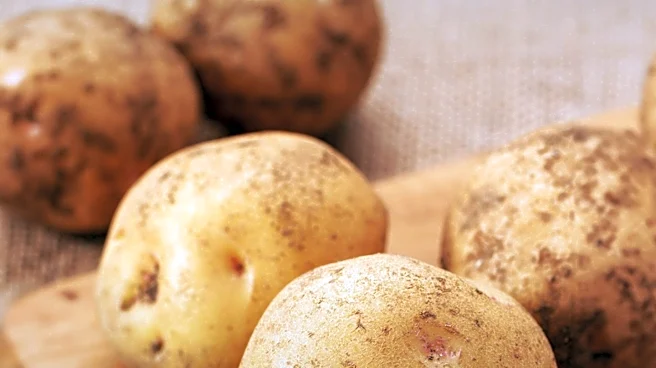
The potato, a staple food with a rich history, is explored in depth, tracing its origins from South America to its global spread. Initially domesticated in the Andes, the potato was introduced to Europe in the 16th century and later to North America.
The article delves into the cultural significance of potatoes, particularly in regions like the Canary Islands, where unique varieties are cultivated. The narrative also touches on personal anecdotes and culinary experiences, highlighting the potato's versatility and its role in various cuisines.
Why It's Important?
Understanding the history and cultural significance of potatoes offers insights into global agricultural practices and food security. As a staple crop, potatoes have played a crucial role in feeding populations worldwide. The exploration of different potato varieties and their culinary uses underscores the importance of biodiversity in agriculture. This knowledge can inform sustainable farming practices and encourage the preservation of heirloom varieties, which are vital for maintaining genetic diversity and resilience against climate change.