






What's Happening?
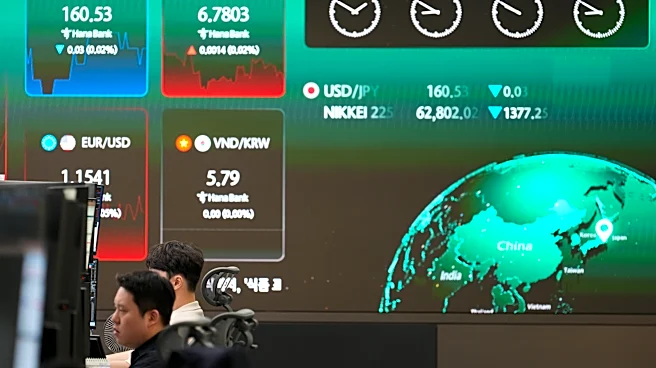
Recent developments in global markets have highlighted a precarious economic outlook, with investors weighing the potential for an AI-driven economic boom against the risks posed by oil shocks stemming from the U.S.-Iran conflict. Global equities reached
an all-time high on June 3, but have since experienced significant volatility, influenced by President Trump's rhetoric on Iran and uncertainties surrounding the reopening of the Strait of Hormuz. Investors are concerned about the potential for prolonged high oil prices, which could lead to stagflation. The correlation between interest rates, inflation, and tech investments has intensified, affecting various asset classes. AI optimism has bolstered Wall Street stocks and global economic forecasts, while energy supply concerns are impacting economies like Germany and India.
Why It's Important?
The situation underscores the delicate balance in global markets, where geopolitical tensions and technological advancements are closely intertwined. The potential for sustained high oil prices could lead to stagflation, affecting consumer prices and economic growth. This scenario poses risks for countries heavily reliant on energy imports and those not benefiting from the tech boom. Conversely, AI-driven growth could enhance economic prospects, particularly for tech-exporting nations. The volatility in markets reflects broader uncertainties about future economic conditions, influencing investment strategies and policy decisions. The outcome of these dynamics will have significant implications for global economic stability and growth trajectories.
What's Next?
Investors and policymakers will closely monitor developments in the U.S.-Iran conflict and the reopening of the Strait of Hormuz, as these factors will significantly influence oil prices and market stability. Asset managers are adjusting their strategies, with some increasing holdings in inflation-linked debt and others hedging against market volatility. The interplay between geopolitical risks and technological advancements will continue to shape market dynamics, requiring adaptive strategies from investors. The potential for rapid market rallies following geopolitical resolutions remains, but the path forward is fraught with uncertainty.