


What's Happening?
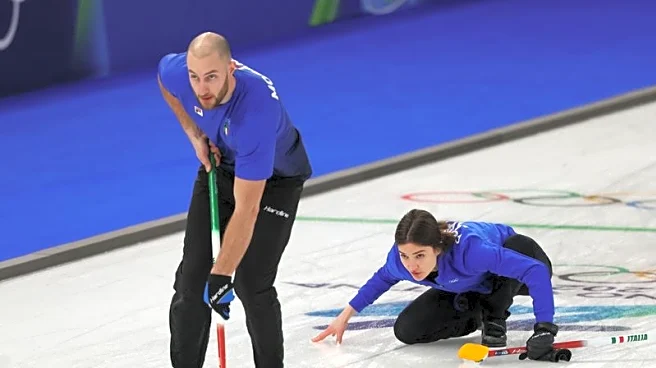
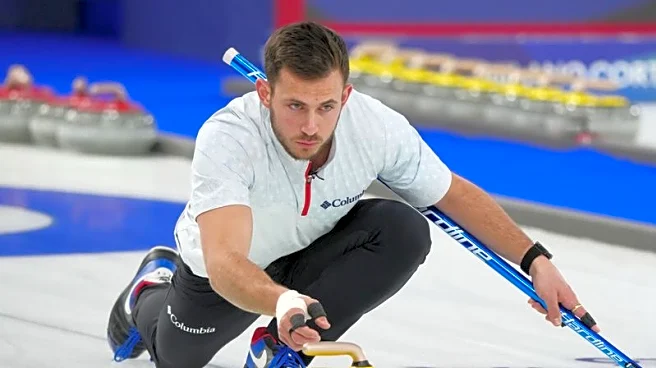
In a thrilling semifinal match at the Milan Cortina Games, the United States' curling team, consisting of Korey Dropkin and Cory Thiesse, triumphed over Italy's Amos Mosaner and Stefania Constantini with a score of 9-8. This victory propels the U.S. team into the gold medal match against Sweden. The match was closely contested, with Italy initially leading 4-2 after three ends. However, Thiesse's strategic play allowed the U.S. to take the lead at the halfway mark. Despite Italy regaining an 8-7 advantage heading into the final end, the U.S. team executed a precise double take-out, securing their win with the last stone. The event was marked by enthusiastic support from both Italian and American fans, creating a vibrant atmosphere at the Cortina Olympic
Curling Centre.
Why It's Important?
This victory is significant for the U.S. curling team as it positions them for a potential gold medal at the Milan Cortina Games. The win against the reigning Olympic and world champions, Italy, underscores the U.S. team's competitive prowess and strategic acumen in the sport. The upcoming final against Sweden, who defeated Britain in their semifinal, presents an opportunity for the U.S. to further establish their dominance in mixed doubles curling. Success in this event could enhance the profile of curling in the United States, potentially increasing interest and investment in the sport. Additionally, it highlights the growing competitiveness of U.S. athletes on the international stage, contributing to national pride and the country's reputation in winter sports.
What's Next?
The U.S. team will face Sweden in the gold medal match, a contest that promises to be highly competitive given Sweden's strong performance against Britain. The outcome of this match will determine the final standings and medal distribution for the mixed doubles curling event. Both teams will likely analyze their semifinal performances to refine strategies and optimize their chances of victory. The result will not only impact the athletes involved but could also influence the future of curling in their respective countries, potentially affecting funding, training programs, and youth participation in the sport.