
What's Happening?
The U.S. Department of Agriculture (USDA) has reported notable shifts in export sales for key agricultural commodities. Soybean futures have declined following a significant drop in export sales, which
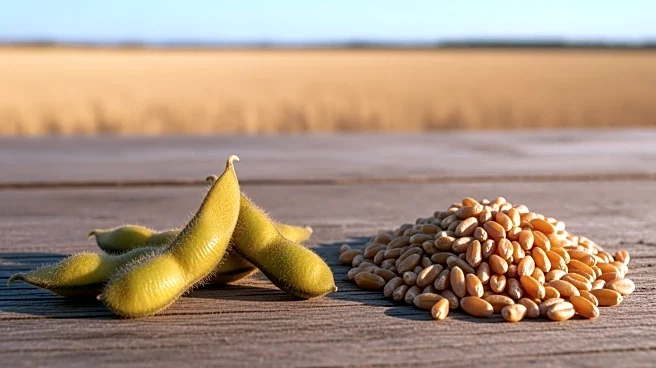
reached a new marketing-year low of 281,800 metric tons. This represents a 36% decrease from the previous week and an 80% drop from the prior four-week average. In contrast, corn sales have surged by 99% from the previous week, totaling 2.07 million metric tons, with Japan being the largest buyer. Wheat sales have also increased, rising to 488,000 metric tons, marking a 31% weekly increase. The USDA's data indicates a 20% year-over-year decrease in soybean commitments, while corn and wheat commitments have increased by 31% and 16%, respectively.
Why It's Important?
These fluctuations in export sales are critical for the U.S. agricultural sector, impacting market prices and influencing future planting decisions. The decline in soybean sales could affect farmers' revenue and prompt a shift in crop planting strategies. Conversely, the increase in corn and wheat sales suggests strong international demand, which could bolster U.S. exports and support domestic prices. These trends are significant for stakeholders, including farmers, exporters, and policymakers, as they navigate the complexities of global agricultural markets and trade policies.
What's Next?
As the peak shipping season for U.S. corn approaches, further increases in export volumes are anticipated. The USDA has adjusted its forecast for corn shipments, raising expectations for the 2025-2026 marketing year. This adjustment may influence future market dynamics and stockpile levels. Additionally, weather conditions in key agricultural regions, such as central Missouri, could impact crop yields and market supply, further affecting export sales and pricing.