

What's Happening?
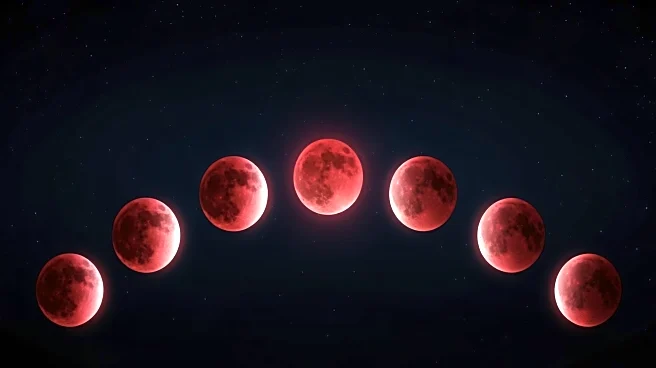
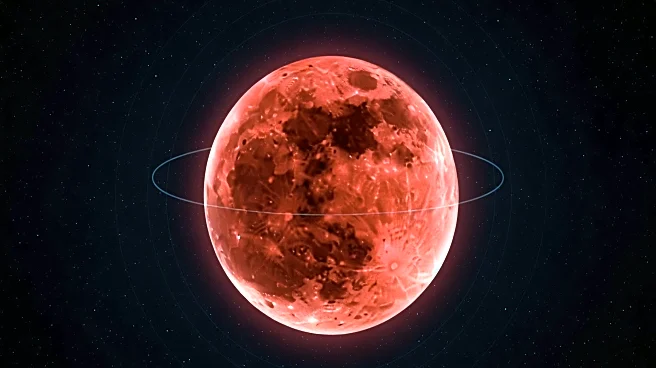
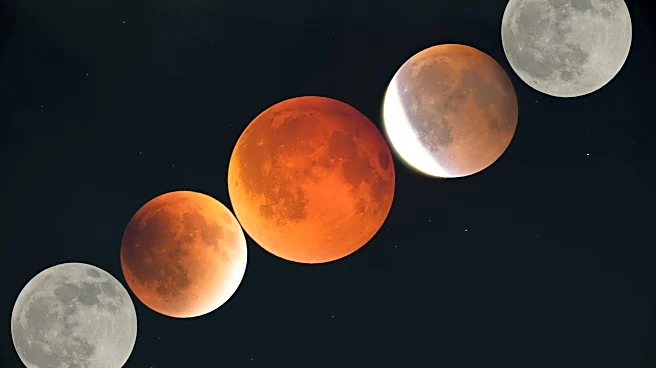
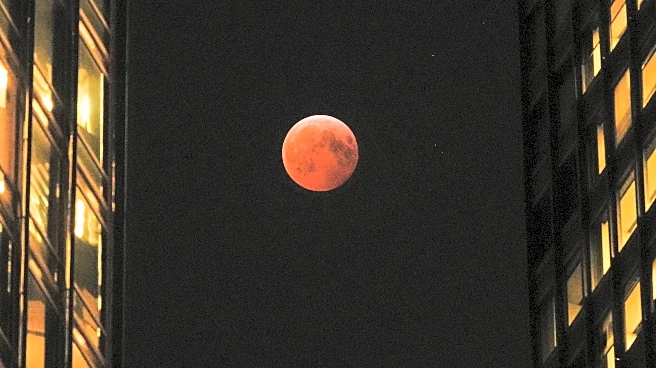
A total lunar eclipse, often referred to as a 'Blood Moon', is set to occur on March 3, 2026. This celestial event will be visible across much of the United States, providing a spectacular view as the full Moon takes on a deep red hue. The eclipse will begin
at 3:44 a.m. Eastern Time, with totality lasting approximately 58 minutes. During this time, the Moon will be fully immersed in Earth's shadow, creating the reddish appearance. The event is safe to view with the naked eye, though binoculars or telescopes can enhance the experience.
Why It's Important?
This lunar eclipse is significant as it offers a rare opportunity for skywatchers to witness a natural phenomenon that won't occur again until 2028. Such events can inspire interest in astronomy and science, encouraging educational activities and public engagement. The eclipse also provides a unique chance for photographers and enthusiasts to capture the beauty of the night sky. Additionally, it highlights the intricate dynamics of celestial bodies and their interactions, fostering a greater appreciation for the universe.
What's Next?
Following this eclipse, astronomers and enthusiasts will look forward to the next total lunar eclipse in 2028. In the meantime, educational institutions and observatories may organize events to discuss the science behind eclipses and other astronomical phenomena. The event could also spark discussions on the importance of preserving dark skies for astronomical observations, potentially influencing policies on light pollution.