


What's Happening?
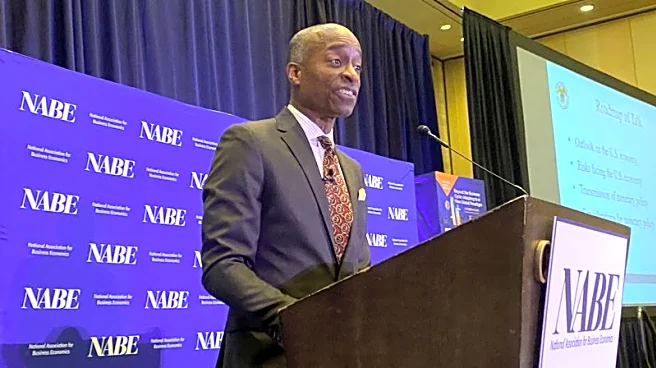
Philadelphia Federal Reserve President Anna Paulson has highlighted the economic risks posed by the ongoing conflict in Iran, noting its potential impact on U.S. inflation and growth. Speaking at a San Francisco Fed event, Paulson expressed concerns over
inflation exceeding the central bank's 2% target, despite efforts to reduce price pressures. She emphasized the challenges of responding to potential AI-driven productivity gains amid high inflation. Paulson indicated that if inflation remains above target, the Fed might need to adjust its monetary policy to prevent economic overheating.
Why It's Important?
Paulson's remarks underscore the delicate balance the Federal Reserve must maintain in managing inflation and economic growth, particularly in the context of geopolitical tensions. The Iran conflict adds uncertainty to global oil markets, potentially driving up energy prices and contributing to inflationary pressures in the U.S. The Fed's response to these challenges will be crucial in maintaining economic stability and preventing overheating. The situation also highlights the broader implications of international conflicts on domestic economic policy and the potential need for adaptive monetary strategies.
What's Next?
The Federal Reserve will likely continue monitoring the situation in Iran and its impact on global markets. Future policy decisions may hinge on developments in the Middle East and their effects on inflation and growth. The Fed may consider adjusting interest rates or other monetary tools to address these challenges. Additionally, the potential for AI-driven productivity gains could influence long-term economic strategies, requiring careful analysis and response from policymakers.