






What's Happening?
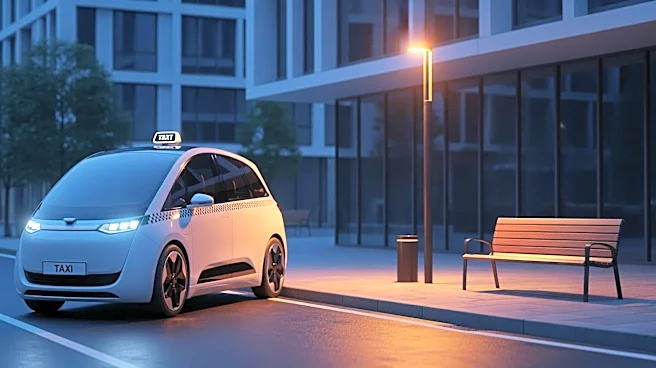
The rise of driverless taxis, spearheaded by companies like Tesla and Waymo, is sparking debate over the future of human interaction in transportation. While proponents argue that autonomous vehicles could reduce accidents and improve efficiency, critics
warn of the loss of human jobs and the erosion of social interactions. The expansion of driverless taxi services into major cities like New York is part of a broader push towards automation in transportation. However, concerns remain about the technology's ability to safely navigate complex urban environments and its impact on the livelihoods of taxi drivers.
Why It's Important?
The shift towards driverless taxis represents a significant technological and societal change, with potential implications for employment, urban planning, and social dynamics. The debate highlights the tension between technological advancement and the preservation of human jobs and interactions. As cities grapple with the integration of autonomous vehicles, policymakers will need to address issues of safety, regulation, and the potential displacement of workers. The outcome of this transition could shape the future of urban transportation and influence public attitudes towards automation.
Beyond the Headlines
The move towards driverless taxis raises ethical questions about the role of technology in society and the balance between convenience and human connection. The potential loss of jobs for taxi drivers underscores the need for policies that support workers displaced by automation. Additionally, the debate reflects broader concerns about the impact of technology on social interactions and community cohesion. As autonomous vehicles become more prevalent, society will need to consider how to preserve meaningful human connections in an increasingly automated world.