




What's Happening?
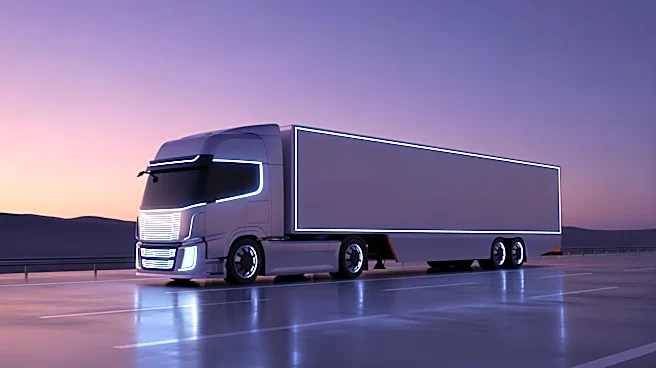
Volvo Trucks North America is advancing its electrification strategy by introducing the VNL Electric, a new Class 8 battery-electric tractor, and enhancing the vocational capabilities of its existing VNR Electric. This move comes despite a slowdown in the heavy-duty
electric vehicle market, driven by federal policy changes and increased costs. The VNL Electric is designed for regional haul, drayage, and city distribution, utilizing a proprietary platform with components like e-axles and batteries from Proterra. The VNR Electric now features a mechanical electric power take-off (ePTO) system, converting high-voltage DC into AC power, enhancing its utility. These developments were announced at the ACT Expo, where industry leaders discussed the financial challenges and shifting priorities in the freight sector.
Why It's Important?
Volvo's continued investment in electric vehicle technology highlights the company's commitment to decarbonization and future-proofing its fleet offerings. As the market for heavy-duty electric vehicles faces challenges, such as increased costs and shifting shipper priorities, Volvo's strategy positions it to capture market share when conditions improve. The introduction of the VNL Electric and enhancements to the VNR Electric demonstrate Volvo's focus on meeting the evolving needs of regional and vocational fleets. This approach could influence other manufacturers and stakeholders in the transportation industry to prioritize sustainable technologies, potentially accelerating the transition to zero-emission vehicles.
What's Next?
Volvo's efforts to expand its electric vehicle lineup may prompt other manufacturers to enhance their own offerings, potentially leading to increased competition in the electric truck market. As the industry navigates economic pressures and policy changes, stakeholders will likely continue to invest in sustainable technologies to meet future demand. The success of Volvo's new models could depend on market conditions, including the availability of incentives and the pace of infrastructure development for electric vehicles. Industry leaders will need to balance current financial realities with long-term sustainability goals.