








What's Happening?
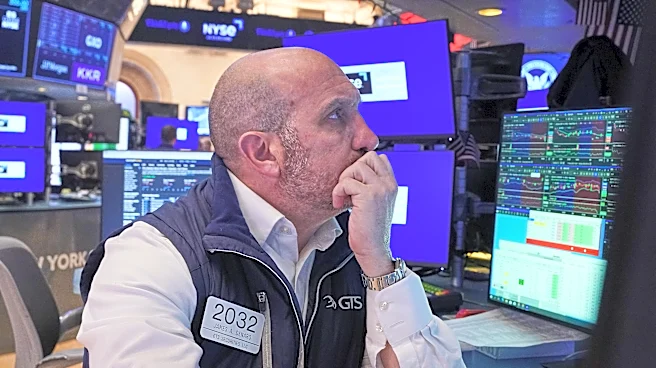
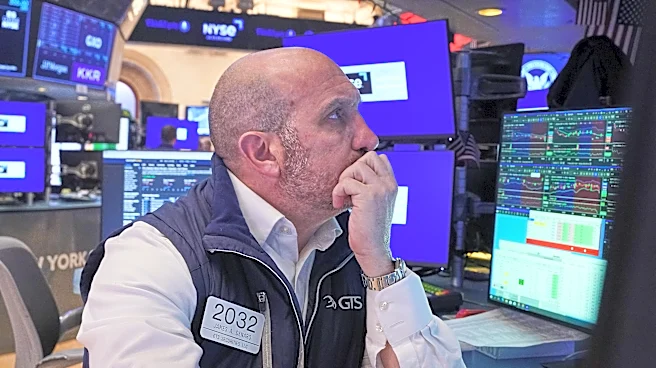
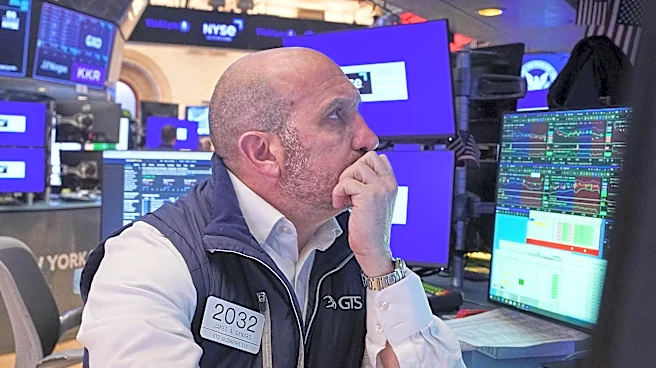
The U.S. stock market experienced a slight decline as oil prices fluctuated due to ongoing tensions in the Strait of Hormuz. The S&P 500 fell by 0.2%, while the Dow Jones Industrial Average dropped by 238 points. The uncertainty surrounding the U.S.-Iran
conflict has led to volatility in oil prices, with Brent crude trading at $102.70 per barrel. The situation has been exacerbated by the U.S. military's seizure of an Iranian oil tanker and President Trump's directive to target Iranian vessels deploying mines. These developments have contributed to market instability and investor caution.
Why It's Important?
The volatility in oil prices and the stock market reflects the broader economic impact of geopolitical tensions. The Strait of Hormuz is a critical chokepoint for global oil supply, and disruptions can lead to significant economic consequences. For investors, the uncertainty surrounding the conflict poses risks to market stability and investment strategies. The situation also highlights the interconnectedness of global markets and the potential for geopolitical events to influence economic conditions worldwide.
What's Next?
As the conflict between the U.S. and Iran continues, further fluctuations in oil prices and market reactions are likely. Investors may seek safer assets or adjust their portfolios in response to ongoing uncertainty. The potential for diplomatic resolutions or escalations will be closely monitored by market participants, as these developments could significantly impact global economic conditions and investment strategies.