
What's Happening?
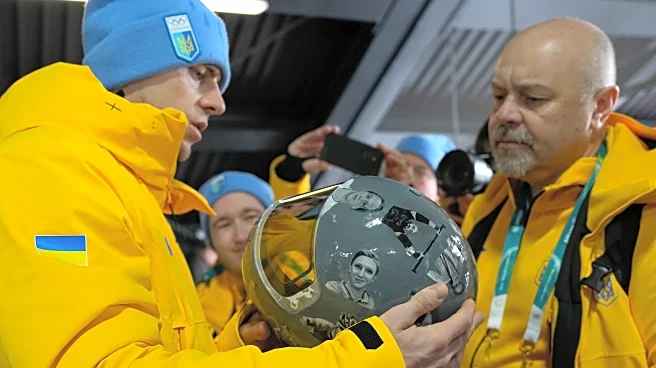
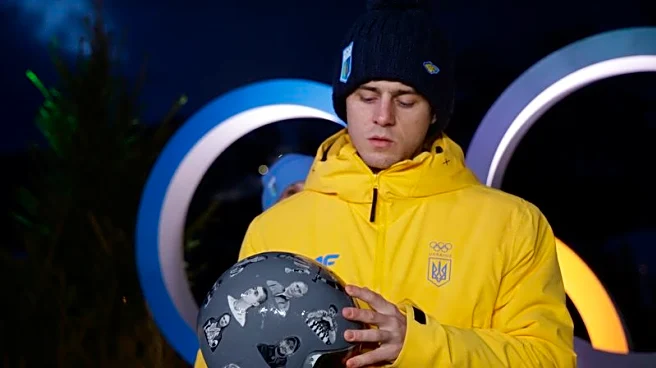
Vladyslav Heraskevych, a Ukrainian skeleton racer, was disqualified from the Winter Olympics in Italy after refusing to change his helmet, which depicted the faces of Ukrainian athletes killed during Russia's
invasion. The International Olympic Committee (IOC) and the International Bobsleigh and Skeleton Federation ruled that the tribute violated competition rules. Heraskevych's helmet featured more than 20 Ukrainian athletes who died in the conflict, including former competitors who joined the Ukrainian Armed Forces. Despite being approached to avoid demonstrations, Heraskevych chose to honor the fallen athletes, stating that their sacrifice meant more than any medal. The IOC offered alternatives, such as wearing a black armband, but Heraskevych rejected these proposals. The disqualification sparked a wave of support from Ukrainian athletes and political leaders, including President Volodymyr Zelensky, who praised Heraskevych's stance.
Why It's Important?
The disqualification of Heraskevych highlights the ongoing tension between sports and political expression, especially in the context of the Ukraine-Russia conflict. The IOC's decision underscores the challenges of maintaining neutrality in international sports while addressing the personal and national sentiments of athletes. This incident raises questions about the consistency of the IOC's rules, as other athletes have been allowed to make personal tributes without facing penalties. The situation also reflects broader geopolitical dynamics, as Ukraine continues to garner international support against Russian aggression. The IOC's stance may influence future policies on athlete expression and the role of sports in political discourse.
What's Next?
Heraskevych's team appealed the IOC's decision to the Court of Arbitration for Sport, which upheld the disqualification. The case may prompt further discussions within the IOC about the balance between maintaining neutrality and allowing athletes to express personal and national sentiments. Ukrainian athletes and officials are likely to continue advocating for the right to honor their fallen compatriots, potentially influencing future Olympic policies. The incident may also impact Ukraine's participation in international sports events and its diplomatic relations with the IOC.
Beyond the Headlines
The disqualification of Heraskevych brings to light the ethical considerations of allowing political expressions in sports. It raises questions about the role of sports as a platform for social and political issues, especially in conflicts involving human rights violations. The IOC's decision may set a precedent for how similar cases are handled in the future, potentially affecting the organization's reputation and its relationship with athletes and nations. The incident also highlights the emotional and cultural significance of sports as a means of remembrance and solidarity in times of conflict.