






What's Happening?
The United States is intensifying efforts to secure its energy independence in response to China's aggressive expansion in solar energy and battery supply chains. The U.S. Department of Energy highlights the strategic importance of solar energy, which
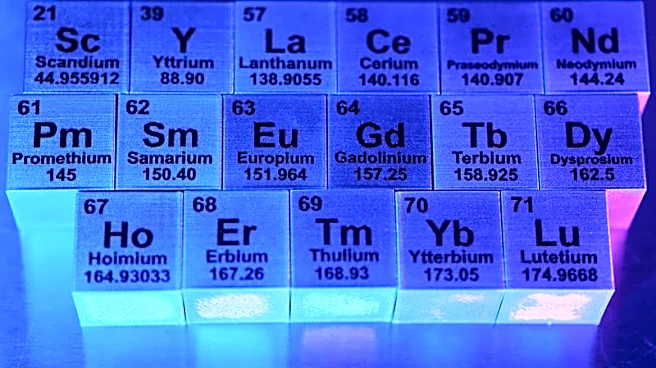
can be stored and used even after sunset, making it a critical component of national security. China currently dominates global solar manufacturing and rare-earth metal processing, controlling 70% of rare earths mining and 90% of processing. This dominance poses a risk of energy dependency on China, similar to past dependencies on fossil fuels. The U.S. is focusing on diversifying its supply chain and increasing domestic production of rare-earth metals, such as lithium, essential for renewable energy technologies and advanced weaponry.
Why It's Important?
The U.S.-China competition in the energy sector has significant implications for national security and economic stability. China's control over critical energy resources could give it leverage over the U.S., potentially impacting economic security and military capabilities. By increasing domestic production of solar energy and rare-earth metals, the U.S. aims to reduce dependency on foreign powers and enhance its resilience against potential supply chain disruptions. This move is also crucial for maintaining the U.S.'s position as a global leader in renewable energy technologies. Strengthening energy independence supports economic growth, job creation, and national security, ensuring that the U.S. can withstand geopolitical tensions and energy market fluctuations.
What's Next?
The U.S. plans to continue expanding its domestic energy production capabilities, focusing on solar power and rare-earth metals. This includes modernizing the national power grid to make it more resilient and less susceptible to disruptions. Policymakers are expected to push for regulatory reforms to facilitate the development of renewable energy sources and reduce bureaucratic hurdles. The U.S. may also seek to form strategic alliances with other countries to secure alternative sources of rare-earth metals and reduce reliance on China. These efforts are likely to be supported by government initiatives aimed at boosting American manufacturing and technological innovation in the energy sector.
Beyond the Headlines
The U.S.-China energy competition highlights broader geopolitical dynamics, where energy resources are increasingly seen as tools of influence and power. The shift towards renewable energy sources like solar power reflects a global trend towards sustainability and environmental responsibility. However, the reliance on rare-earth metals raises ethical and environmental concerns, as mining and processing these materials can have significant ecological impacts. The U.S. must balance its energy independence goals with environmental stewardship and ethical sourcing practices. This competition also underscores the need for international cooperation in developing sustainable energy solutions and addressing the environmental challenges associated with resource extraction.