






What's Happening?
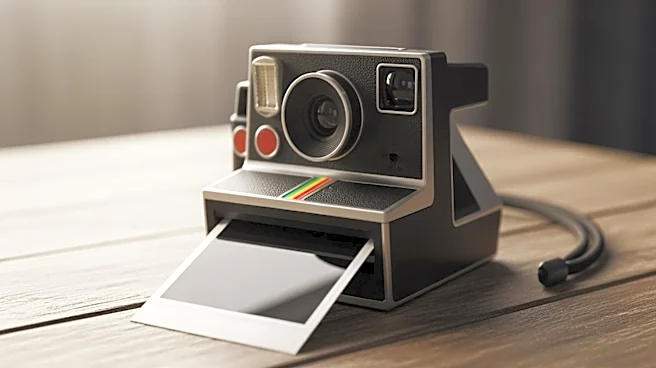
In a digital age where technology and artificial intelligence dominate, Fujifilm's Instax Wide 400 camera is gaining popularity for its nostalgic appeal. Priced at $175, this model caters to photography enthusiasts who appreciate the charm of analog photography.
The Instax Wide 400 produces wide-format images, measuring 62 x 99 mm, which are twice the size of the standard Instax Mini photos. The camera is designed for simplicity, with automatic controls for flash and focus, allowing users to easily capture group photos and landscapes. The camera's operation is straightforward: rotating the lens counterclockwise turns it on, with the first stage activating close-up focus and the second stage enabling landscape mode. A special lens attachment is included to enhance close-up photo quality. While the camera performs well in well-lit conditions, producing bright and sharp images, it may struggle with high-contrast scenes, where details can become slightly blurred.
Why It's Important?
The resurgence of analog photography, as exemplified by the Instax Wide 400, highlights a growing trend among consumers seeking alternatives to digital technology. This trend reflects a broader cultural shift towards valuing tangible, physical experiences in an increasingly digital world. For Fujifilm, the popularity of the Instax Wide 400 represents a successful niche market strategy, capitalizing on the demand for retro-style products. This trend could influence other companies to explore similar opportunities, potentially leading to a diversification of product offerings in the photography industry. Additionally, the camera's simplicity and ease of use make it accessible to a wide range of users, from casual photographers to enthusiasts, further broadening its market appeal.
What's Next?
As the demand for analog photography continues to grow, Fujifilm and other companies may expand their product lines to include more models that cater to this market. This could involve developing new features that enhance the user experience while maintaining the simplicity and charm that attract consumers to analog photography. Additionally, the success of the Instax Wide 400 may encourage other manufacturers to revisit and innovate within the analog photography space, potentially leading to a renaissance of film-based photography products. The industry may also see collaborations between digital and analog technologies, offering hybrid solutions that appeal to a broader audience.