







What's Happening?
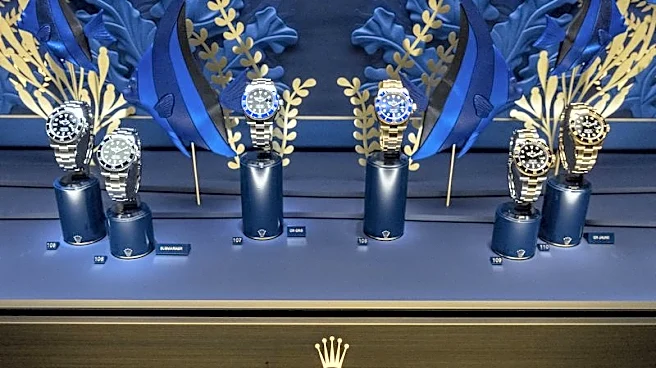
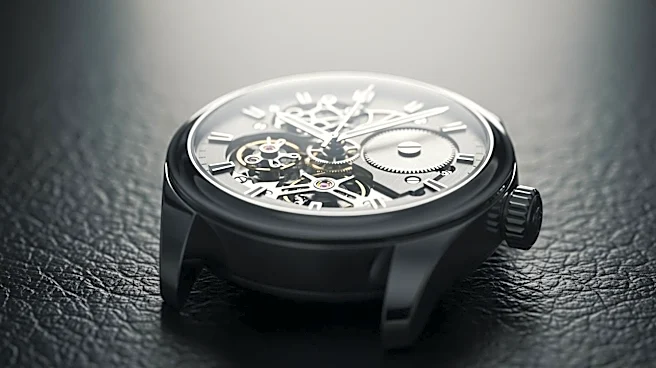
The luxury watch market is undergoing a significant shift from a period of premiumization to recalibration, according to a report by Strategic Gears. Over the past two decades, Swiss watch manufacturers have reduced their output while increasing export
revenue, focusing on high-value models. The market is dominated by brands like Rolex, Cartier, and Patek Philippe, which account for a significant share of the market. However, recent geopolitical risks and inflation have introduced uncertainty, prompting brands to reconsider their strategies.
Why It's Important?
This shift in the luxury watch market highlights the broader economic challenges facing luxury goods sectors. The recalibration reflects a need to adapt to changing consumer behaviors and economic conditions. For U.S. stakeholders, particularly those in the luxury retail and investment sectors, understanding these dynamics is crucial for navigating market volatility. The emphasis on high-value products and secondary market premiums indicates a continued demand for exclusivity, which can influence pricing strategies and brand positioning.
What's Next?
As the market recalibrates, luxury watch brands are exploring new strategies, such as expanding certified pre-owned programs and leveraging AI for consumer insights. These moves aim to maintain brand desirability while adapting to tighter liquidity and geopolitical uncertainties. The industry is likely to see a focus on balancing short-term revenue goals with long-term brand reputation, as companies navigate a complex global economy.