





What's Happening?
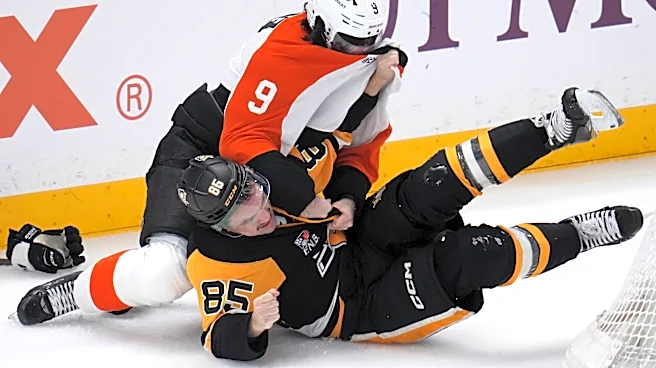
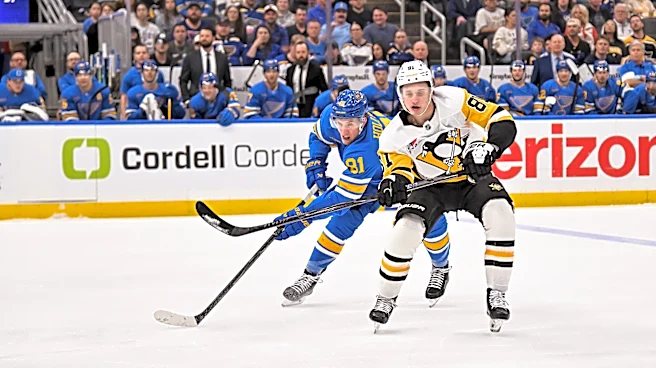
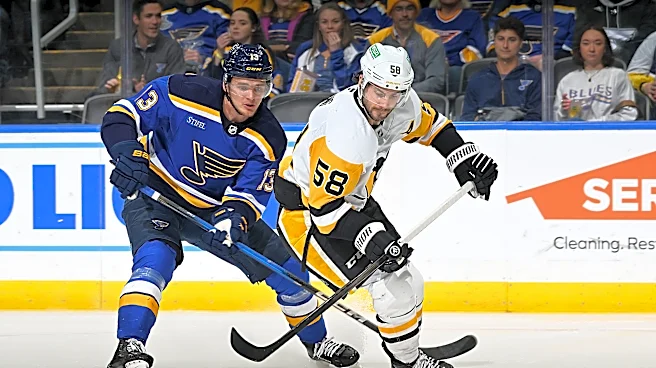
The Philadelphia Flyers have secured a spot in the playoffs and are set to face their archrival, the Pittsburgh Penguins, in the first round. This achievement comes after a dramatic and unexpected run that saw the Flyers defy expectations and clinch their playoff berth
in the penultimate game of the season. The team, led by coach Rick Tocchet, has maintained a consistent lineup that has proven effective during their late-season surge. Key players like Tyson Foerster, Trevor Zegras, and Owen Tippett have been instrumental in the Flyers' success, providing reliable performance across all situations. The Flyers' lineup strategy focuses on maintaining strong partnerships and leveraging the strengths of both veteran players and emerging talents.
Why It's Important?
The Flyers' entry into the playoffs is significant as it marks a return to postseason competition after several years. This achievement boosts the team's morale and provides a platform to showcase their growth and potential against a formidable opponent like the Penguins. The playoff series is not only a test of the Flyers' capabilities but also an opportunity to strengthen their fan base and increase their visibility in the NHL. Success in the playoffs could lead to increased revenue from ticket sales, merchandise, and sponsorships, further supporting the team's development. Additionally, the Flyers' performance could influence future team strategies and player development programs, setting a precedent for other teams in the league.
What's Next?
As the Flyers prepare for their playoff series against the Penguins, they will focus on fine-tuning their lineup and strategies to maximize their chances of success. The team will need to balance the experience of veteran players with the energy and skill of younger talents to compete effectively. Coach Rick Tocchet may make strategic adjustments to the lineup based on the performance of key players and the dynamics of the series. The outcome of the series will have implications for the Flyers' future, potentially affecting player contracts, team management decisions, and long-term planning.