






What's Happening?
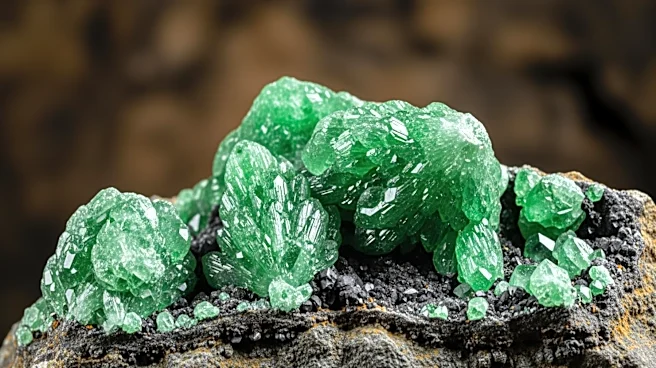
Researchers at MIT have developed a new low-temperature process to extract battery-grade lithium from spodumene, a common lithium-bearing hard rock, with significantly less waste and energy consumption. Traditionally, lithium extraction from spodumene involves
high temperatures and results in substantial waste. The new method, detailed in a paper published in Science, uses a closed-loop process that operates below 100 degrees Celsius, avoiding the energy-intensive roasting step. This process not only extracts lithium but also recovers alumina and silica as useful byproducts, potentially cutting refining costs by half compared to conventional methods. The innovation could make lithium extraction more cost-effective and environmentally friendly, aligning with efforts to increase domestic production of critical minerals in the U.S.
Why It's Important?
This development is significant as it addresses one of the major bottlenecks in the lithium extraction industry, which is crucial for the battery economy. By reducing the cost and environmental impact of lithium extraction, the new process could enhance the competitiveness of U.S. and other non-Chinese lithium resources, reducing reliance on Chinese refining capabilities. This aligns with broader industrial policies aimed at securing supply chains for critical minerals. Additionally, the ability to produce marketable byproducts like alumina and silica could further lower costs and reduce waste, making the process more sustainable. This innovation could also influence how other silicate minerals are processed, potentially reshaping the materials processing industry as demand for electrification materials rises.
What's Next?
The MIT team has already moved beyond laboratory experiments, launching a company called Rock Zero to scale the process. If successful, this could lead to the establishment of new lithium extraction facilities in the U.S. and other regions with abundant hard-rock lithium deposits. The process's scalability and economic viability will be critical in determining its impact on the global lithium market. As the demand for lithium continues to grow, driven by the electric vehicle industry and renewable energy storage, this new method could play a pivotal role in meeting future supply needs while minimizing environmental impact.
Beyond the Headlines
The broader implications of this development extend to industrial policy and environmental sustainability. By potentially decentralizing lithium refining, the process could shift economic benefits to regions with lithium resources, fostering local economic development. The closed-loop nature of the process also highlights a shift towards more sustainable mining practices, where waste is minimized, and byproducts are utilized. This approach could set a precedent for other industries reliant on mineral extraction, promoting a more circular economy. Furthermore, the reduction in energy use and waste aligns with global efforts to combat climate change by reducing industrial carbon footprints.