



What's Happening?
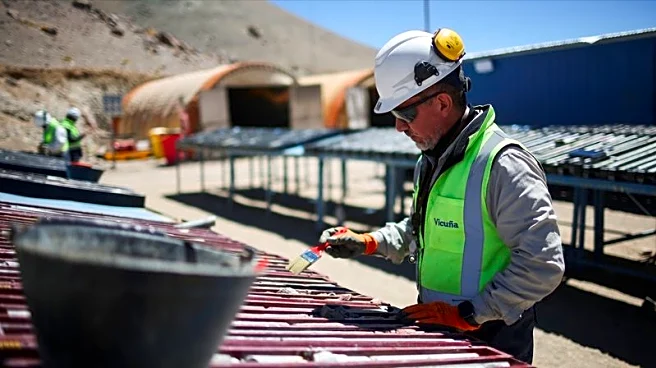
Vicuña Corp., a prominent mining company, is significantly increasing its investment in copper exploration projects located in the Andes Mountains along the Argentina–Chile border. The company plans to double its investment to $800 million this year, focusing on the Filo del Sol and Josemaría mines. These projects are poised to become major global copper resources. Vicuña Corp., a joint venture between Australia's BHP and Canada's Lundin Mining, is targeting the Vicuña District, which is rich in copper, gold, and silver deposits. The company has projected a total investment of $5 billion, with local experts suggesting it could reach as high as $15 billion. This expansion is part of Argentina's broader strategy to attract foreign capital under
President Javier Milei's administration, aiming to rejuvenate the country's copper production amidst global concerns over potential metal shortages necessary for electrification.
Why It's Important?
The expansion of Vicuña Corp.'s mining operations in the Andes is significant for several reasons. Firstly, it aligns with Argentina's efforts to attract foreign investment and boost its mining sector, which is crucial for the country's economic growth. The increased copper production could help alleviate global concerns about metal shortages, particularly as copper is essential for electrification and renewable energy technologies. This development also highlights the strategic importance of the Andes region in global copper supply chains. For Argentina, the influx of investment and the potential increase in copper exports could strengthen its economic position and provide a much-needed boost to its mining industry. Additionally, the collaboration between major international mining companies underscores the region's attractiveness as a mining hub.
What's Next?
As Vicuña Corp. moves forward with its investment plans, several key developments are anticipated. The company will likely focus on overcoming logistical challenges associated with high-altitude mining and infrastructure development. The success of these projects could lead to further investments in the region, potentially attracting more international mining companies. Additionally, the Argentine government may continue to implement policies that encourage foreign investment in the mining sector, further enhancing the country's economic prospects. Stakeholders, including local communities and environmental groups, may also play a role in shaping the future of these mining projects, particularly concerning environmental and social impacts.