





What's Happening?
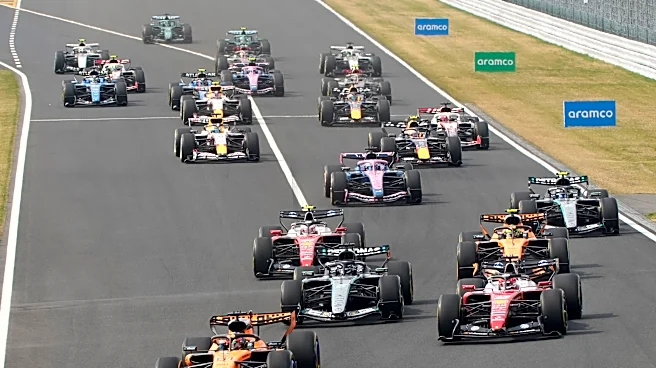
Formula 1 has announced minor revisions to its 2026 regulations ahead of the Miami Grand Prix. These changes aim to improve the racing spectacle by addressing issues related to energy management and safety. The adjustments include a reduction in maximum
permitted recharge from 8MJ to 7MJ per lap and an increase in peak superclip power to 350 kW. These changes are intended to encourage more consistent flat-out driving and reduce the driver's workload on energy management. Additionally, a new 'low power start detection' system will be implemented to ensure a minimum level of acceleration at race starts, enhancing safety without providing any sporting advantage.
Why It's Important?
The tweaks to the 2026 Formula 1 regulations are significant as they aim to enhance the overall racing experience by addressing driver concerns about energy management and safety. By reducing the recharge time and increasing power limits, the changes are expected to allow drivers to push their cars harder, potentially leading to more exciting and competitive races. The introduction of safety measures like the 'low power start detection' system reflects Formula 1's commitment to maintaining high safety standards. These adjustments could influence future regulatory decisions and set a precedent for balancing performance with safety in motorsport.
What's Next?
The implementation of these rule changes at the Miami Grand Prix will serve as a test for their effectiveness in improving the racing experience. Stakeholders will closely monitor the impact of these adjustments on race dynamics and driver performance. Feedback from drivers and teams will be crucial in determining whether further modifications are needed. The success of these changes could lead to more widespread adoption of similar measures in future seasons, potentially influencing the direction of Formula 1 regulations and the sport's approach to balancing innovation with safety.