







What's Happening?
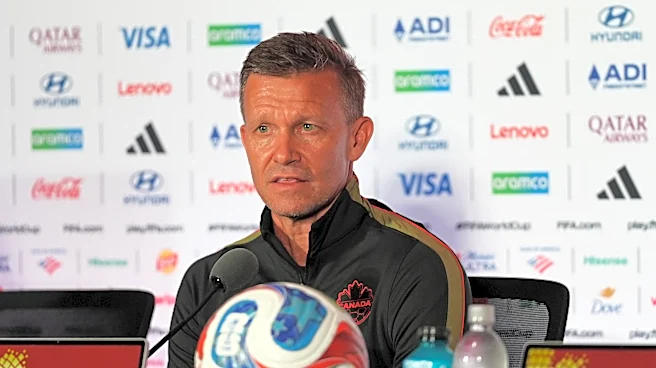
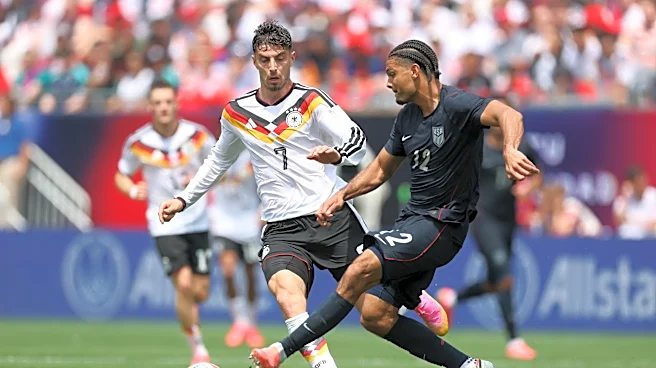
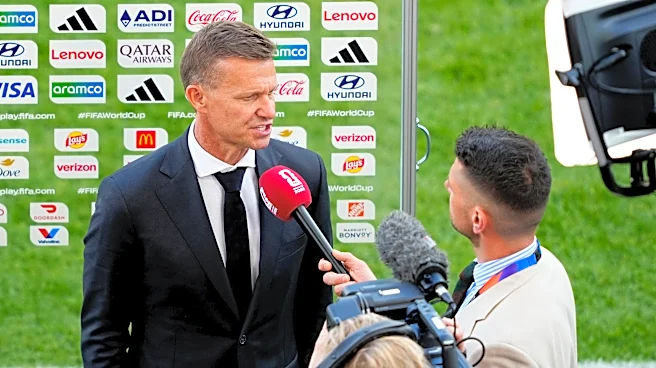
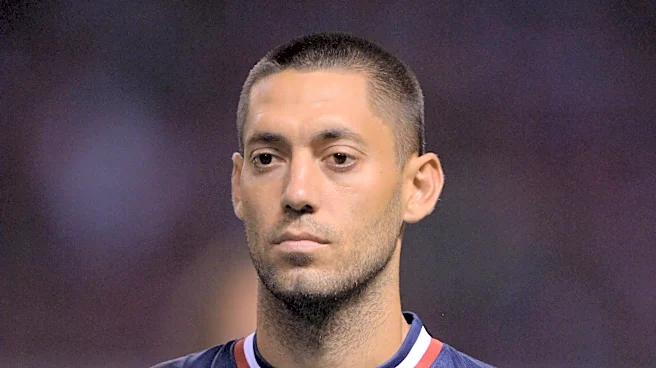
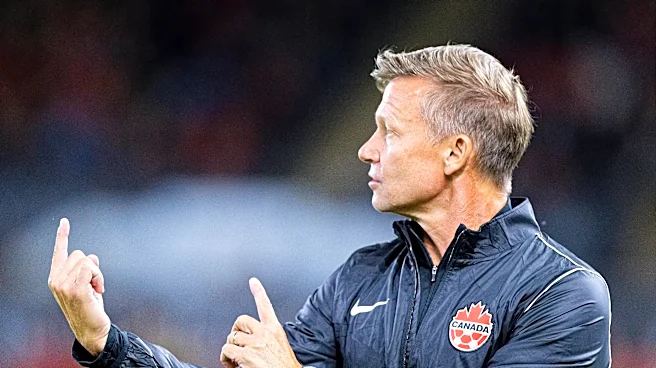
Former U.S. men's national team player Clint Dempsey has publicly criticized Canada manager Jesse Marsch for comments suggesting that past American players were reluctant to sing the national anthem. Marsch, during a pre-match news conference, remarked
that in the U.S., players sometimes had to be encouraged to sing the anthem, contrasting this with the pride Canadian players show. Dempsey, known for his dedication to the U.S. team, expressed his disapproval on Fox's pre-match coverage, emphasizing his own pre-match routine of prayer rather than singing. He highlighted his commitment to the U.S. team, citing personal sacrifices and injuries sustained while representing the country. Marsch's comments were intended to highlight the pride and unity within the Canadian team, which includes players from diverse backgrounds.
Why It's Important?
The exchange between Dempsey and Marsch underscores the sensitive nature of national pride and representation in international sports. For the U.S. men's national team, the national anthem is a symbol of unity and patriotism, and any suggestion of reluctance to participate can be seen as questioning a player's commitment. Dempsey's response reflects a broader sentiment among athletes who view representing their country as an honor. This incident also highlights the cultural differences in how national pride is expressed and perceived in sports, potentially affecting team dynamics and public perception. The controversy may influence how national teams approach pre-match traditions and the expectations placed on athletes to publicly display patriotism.
What's Next?
As the World Cup progresses, both the U.S. and Canadian teams will continue to navigate the pressures of international competition. The incident may prompt discussions within teams about the role of national symbols and the expectations for athletes to engage with them. It could also lead to broader conversations about how national identity is expressed in sports and the impact of public statements by coaches and players. Teams may seek to address any internal or external perceptions of disunity to maintain focus on their performance in the tournament.