



What's Happening?
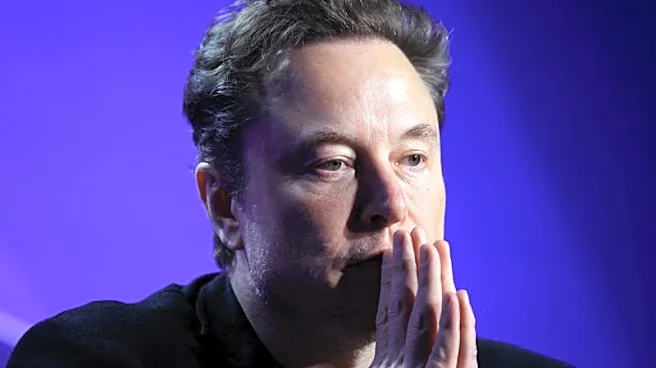
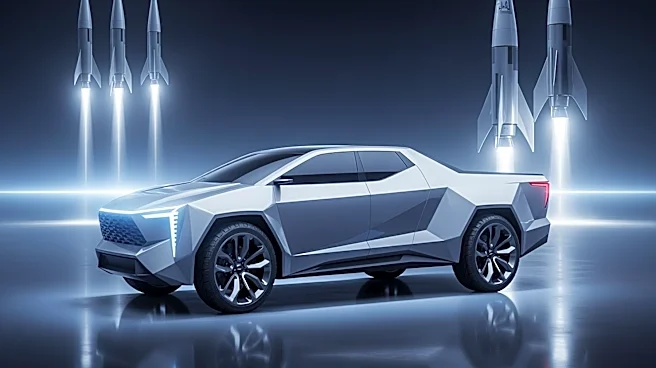
Tesla's Cybertruck sales have been significantly bolstered by purchases from SpaceX, a company also led by Elon Musk. According to a Bloomberg analysis, SpaceX accounted for 18% of Cybertruck registrations in the fourth quarter, purchasing 1,279 units.
Other Musk-affiliated companies bought an additional 60 Cybertrucks. This internal procurement has helped mitigate a potential 51% decline in Cybertruck registrations during the same period. Originally, Elon Musk had projected annual sales of 250,000 Cybertrucks by 2025, but only about 17,000 have been sold so far. The purchases by SpaceX and other Musk companies appear to be a strategic move to address Tesla's consumer demand challenges and aging inventory.
Why It's Important?
The internal purchases by SpaceX highlight the challenges Tesla faces in meeting its ambitious sales targets for the Cybertruck. This situation underscores the broader difficulties in the electric vehicle market, where consumer demand can be unpredictable. The reliance on internal company purchases to sustain sales figures may indicate underlying issues with market acceptance or production capabilities. For Tesla, maintaining its market position and achieving its sales goals is crucial, as it impacts investor confidence and the company's valuation. The situation also reflects on Elon Musk's broader strategy of leveraging his network of companies to support each other, which could have implications for how businesses manage internal resources and market challenges.
What's Next?
Moving forward, Tesla will need to address the underlying issues affecting Cybertruck sales to avoid relying on internal purchases. This may involve revisiting marketing strategies, production processes, or even the product design itself to better align with consumer expectations. Additionally, as SpaceX and other Musk companies cannot sustain such procurement levels indefinitely, Tesla will need to find ways to boost external consumer demand. The company may also explore new markets or product innovations, such as robots and AI, as indicated by Musk's recent focus shift, to diversify its revenue streams and reduce dependency on any single product line.