
What's Happening?
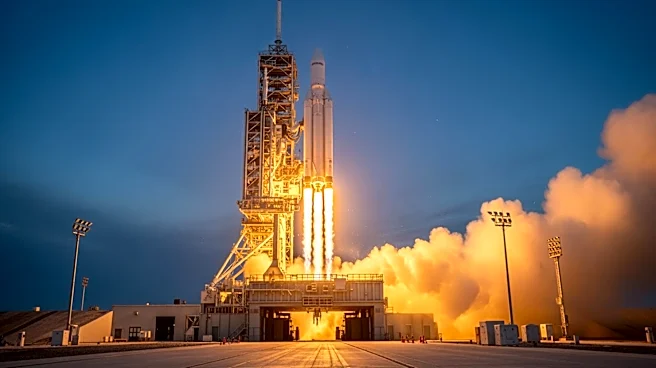
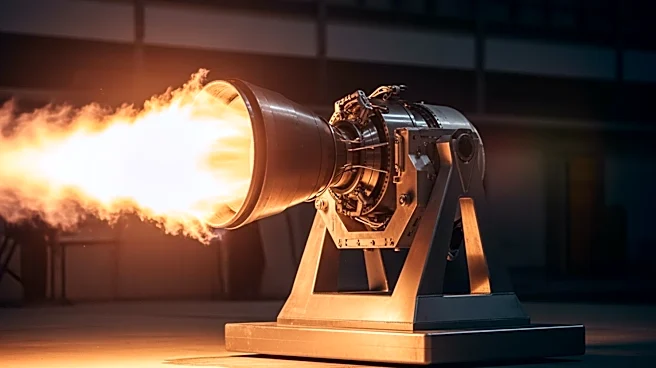
SpaceX has successfully ignited 33 Raptor 3 engines in a static fire test for the Starship V3, marking a significant milestone in its development of the world's most powerful rocket. This test, conducted
on May 7, 2026, is a precursor to the first flight scheduled for May 12. The Starship V3, which represents a complete evolution of the original Starship architecture, is designed to deliver more thrust and efficiency than its predecessors. The rocket's total thrust at liftoff surpasses that of the Saturn V, the rocket that carried the Apollo missions. SpaceX has been developing this version since late 2024, aiming to place over 100 tons of payload into low Earth orbit. The upcoming launch will occur at SpaceX's Starbase in Boca Chica, Texas, and will feature a deliberate splashdown to validate the new architecture.
Why It's Important?
The successful ignition of the Raptor 3 engines and the upcoming launch of the Starship V3 are pivotal for SpaceX's ambitions to revolutionize space travel. By achieving a thrust capacity that exceeds the historic Saturn V, SpaceX is setting a new standard for rocket power and efficiency. This development is crucial for reducing the cost of sending payloads into orbit, potentially lowering it to below $100 per kilogram. Such a reduction could make previously unfeasible missions routine, benefiting satellite constellations, scientific missions, and commercial payloads. Additionally, the Starship V3 is integral to NASA's Artemis program, which plans to use a derived version of the rocket as a lunar lander. The success of this launch could also influence SpaceX's plans for Mars missions, further solidifying its role in future space exploration.
What's Next?
Following the scheduled launch on May 12, SpaceX will focus on validating the new V3 architecture through a series of tests, including splashdowns and orbital maneuvers. The company aims to demonstrate in-space refueling, a critical capability for future lunar and Mars missions. The success of these tests could accelerate SpaceX's plans for uncrewed Mars landings during the 2028 transfer window. Additionally, the outcome of the launch could impact SpaceX's financial strategies, including potential IPO plans, as investors closely monitor the company's progress. However, the launch is contingent on final FAA licensing and favorable weather conditions, with backup windows available on May 13 and 14.