

What's Happening?
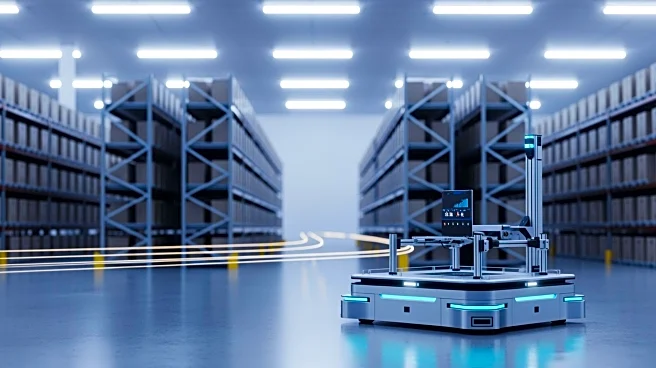
Manufacturers are increasingly deploying Automated Guided Vehicles (AGVs) and Autonomous Mobile Robots (AMRs) to address labor shortages and enhance automation in material movement. However, many of these deployments are failing to achieve the expected
return on investment (ROI) due to strategic flaws in planning. The primary issue lies in the lack of integration of human decision-making processes into the automation strategy. Human workers naturally make situational decisions that keep operations running smoothly, but robots require explicit instructions and data to perform similar tasks. Without accounting for these decision points, robots struggle to handle complex and dynamic tasks, leading to inefficiencies and frequent human intervention.
Why It's Important?
The failure to achieve desired ROI from AGV and AMR deployments highlights the critical need for manufacturers to develop comprehensive automation strategies that incorporate human decision-making logic. By doing so, manufacturers can optimize the performance of their robotic fleets, reduce operational inefficiencies, and fully realize the benefits of automation. This is particularly important in the context of ongoing labor shortages, where automation is seen as a key solution to maintaining productivity. The ability to effectively integrate robots into manufacturing processes can provide a competitive advantage, enabling companies to meet demand and improve operational resilience.
What's Next?
To address the challenges associated with AGV and AMR deployments, manufacturers must focus on developing robust orchestration strategies that facilitate interoperability and real-time communication between robots and other systems. This involves creating a control layer that provides a unified environment for planning, scheduling, and monitoring tasks. By integrating robots with key systems such as warehouse management and enterprise resource planning, manufacturers can ensure that robots operate with full context and make informed decisions. As manufacturers refine their automation strategies, they may also explore the use of intralogistics platforms to coordinate robots, equipment, and enterprise systems, providing a scalable foundation for long-term growth.