






What's Happening?
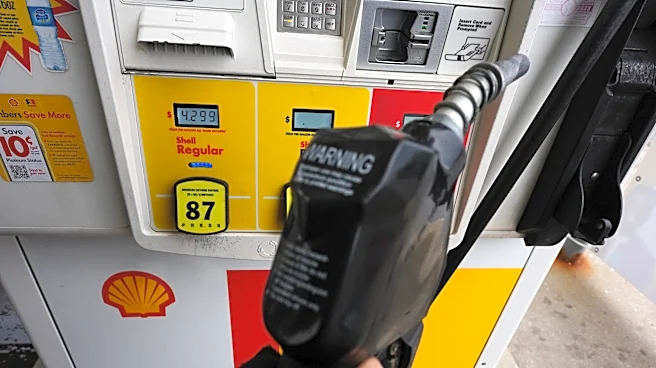
The ongoing conflict in Iran has led to significant economic repercussions in the United States, primarily through the blockage of the Strait of Hormuz, a critical passage for oil tankers. This has resulted in a sharp increase in gas prices, which has quickly
eroded the disposable income of American consumers, particularly affecting those with lower incomes. The rise in energy costs has contributed to higher inflation rates, slowed wage growth, and decreased consumer confidence. Economists warn that the longer the strait remains blocked, the more severe the economic consequences could become, potentially leading to a prolonged economic downturn. The Federal Reserve may be compelled to raise interest rates to combat oil-driven inflation, which could further slow economic growth.
Why It's Important?
The situation poses a significant threat to the U.S. economy, as rising energy costs act as an additional tax on households and businesses, reducing spending in other areas. This could lead to a decrease in consumer spending, a key driver of the U.S. economy, and result in a slowdown in business investments and hiring. The potential for a prolonged economic downturn could lead to layoffs and increased financial hardship for many Americans. Additionally, the disruption in oil supply could have cascading effects on other commodities, such as fertilizers and helium, further exacerbating inflation and economic instability.
What's Next?
Even if the conflict in Iran were to end immediately, the economic recovery would not be swift. It could take months or even years for oil production and supply chains to return to pre-war levels. In the meantime, consumers and businesses will need to adapt to the new economic realities, potentially leading to permanent changes in spending and investment behaviors. The Federal Reserve's response to rising inflation will be closely watched, as any increase in interest rates could further impact economic growth.
Beyond the Headlines
The current economic situation highlights the vulnerability of the U.S. economy to global geopolitical events and the interconnectedness of global supply chains. The reliance on oil from the Middle East underscores the need for diversification of energy sources and increased investment in renewable energy. Additionally, the economic strain on lower-income households raises concerns about economic inequality and the need for policies that provide financial support to those most affected by rising costs.