
What's Happening?
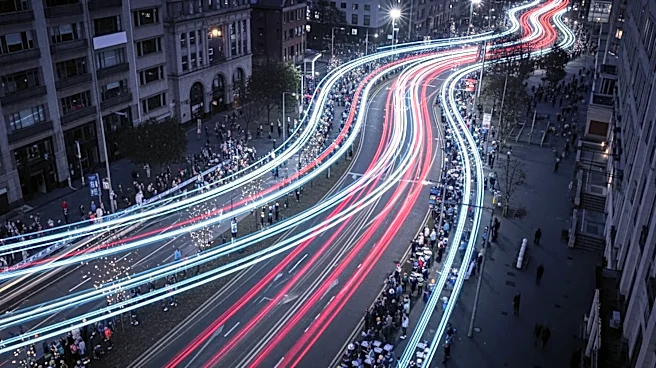
The Boston Marathon, one of the world's most prestigious races, is employing crowd science to manage its expanding field of over 30,000 runners. Marcel Altenburg, a crowd science expert from Manchester
Metropolitan University, has been tasked with optimizing the race experience. His simulations have led to changes such as increasing the number of starting waves from four to six, helping to alleviate congestion on the narrow streets of Massachusetts. These adjustments aim to enhance the running experience while maintaining the race's historic character.
Why It's Important?
The use of crowd science in the Boston Marathon reflects a broader trend of applying scientific methods to improve large-scale events. This approach not only enhances participant experience but also ensures safety and efficiency. As the marathon continues to grow, these innovations are crucial for maintaining its reputation and accommodating increasing numbers of participants. The changes also highlight the importance of balancing tradition with modern needs, ensuring the marathon remains a beloved event while adapting to contemporary challenges.
What's Next?
The Boston Athletic Association will evaluate the impact of these changes over the next three years, considering participant feedback to determine future adjustments. While the course and its duration remain fixed, further innovations may be explored to enhance the race experience. The success of these measures could influence other major events, encouraging the adoption of crowd science to manage large gatherings effectively.
Beyond the Headlines
The integration of crowd science into the Boston Marathon underscores the potential for scientific approaches to transform traditional events. This could lead to a reevaluation of how large public events are organized, prioritizing participant experience and safety. The marathon's adjustments may serve as a model for other events facing similar challenges, promoting a more scientific approach to event management.