







What's Happening?
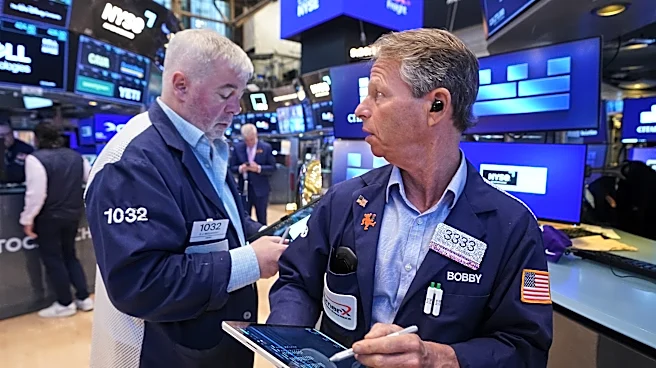
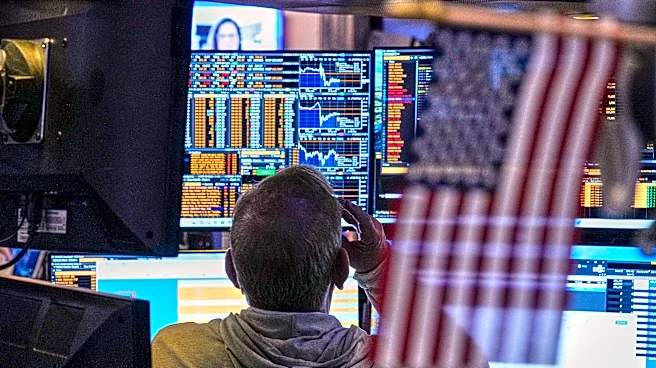
Wall Street's major indices experienced significant declines, with the Nasdaq dropping over four percent, the S&P 500 falling more than two percent, and the Dow Jones Industrial Average decreasing by over one percent. This downturn was primarily driven
by a massive sell-off in technology stocks, particularly those heavily invested in artificial intelligence. The 'Magnificent Seven,' which includes major AI players like Nvidia, Google-parent Alphabet, and Meta, all closed lower. The sell-off was exacerbated by a robust jobs report that heightened fears of inflation and potential U.S. Federal Reserve interest rate hikes. The U.S. economy added 172,000 jobs in May, surpassing expectations and leading to concerns about the Fed's monetary policy direction.
Why It's Important?
The significant drop in Wall Street indices highlights the volatility in the stock market, particularly within the technology sector. The robust jobs report suggests a strong economy, which could prompt the Federal Reserve to consider raising interest rates sooner than anticipated. Higher interest rates typically increase borrowing costs, which can negatively impact companies, especially those in the tech sector that rely heavily on borrowing for growth. This situation could lead to a broader economic impact, affecting consumer spending and business investments. Investors and companies may need to adjust their strategies in anticipation of potential rate hikes.
What's Next?
The Federal Reserve's next steps will be closely watched by investors and analysts. If the Fed signals a shift towards a more hawkish monetary policy, it could lead to further market volatility. Companies, particularly in the tech sector, may need to reassess their investment strategies and prepare for higher borrowing costs. Additionally, the ongoing geopolitical tensions and their impact on energy prices could further influence the Fed's decisions and market dynamics.