




What's Happening?
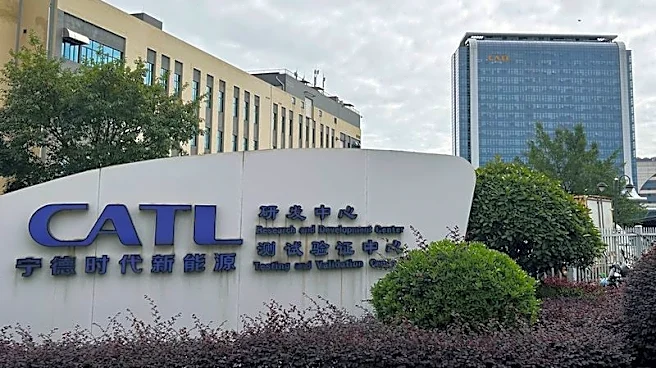
CATL, a leading battery supplier, reported a substantial increase in its financial performance for the first quarter of 2026. The company's revenue reached 129.1 billion yuan, marking a 52% year-over-year increase, while its net profit attributable to
the parent company rose by 48% to 20.7 billion yuan. This translates to an average daily net profit of 230 million yuan. In 2025, CATL's net profit was 72.2 billion yuan, nearly matching the combined net profit of five major automakers: BYD, Geely, SAIC, Great Wall, and Changan. The financial report also highlighted CATL's strong position in the supply chain, with significant advance payments from customers and extended payment periods to suppliers.
Why It's Important?
The financial success of CATL underscores the shifting dynamics within the automotive industry, where battery suppliers are gaining significant leverage over traditional automakers. This shift is largely due to the high cost and complexity of battery production, which many automakers have opted to outsource. As a result, companies like CATL have become critical players, with substantial pricing power and influence over the supply chain. This development has implications for the profitability and strategic decisions of automakers, who may face challenges in maintaining margins and competitiveness in the evolving market landscape.
What's Next?
The continued dominance of CATL in the battery supply market suggests that automakers may need to reassess their strategies, potentially increasing investments in battery technology or seeking alternative suppliers to mitigate dependency. The industry's focus on electric vehicles and the associated supply chain dynamics will likely drive further consolidation and strategic partnerships. Additionally, the financial pressures on automakers could lead to increased collaboration or mergers to enhance competitiveness and innovation in the electric vehicle sector.
Beyond the Headlines
The concentration of profit within battery suppliers like CATL raises questions about the long-term sustainability of the current industry model. If automakers continue to experience reduced profitability, it could impact their ability to invest in new technologies and expand their market presence. This imbalance may also affect smaller suppliers and consumers, potentially leading to higher costs or reduced innovation. The industry's reliance on a few key battery suppliers could also pose risks related to supply chain disruptions or geopolitical tensions.