
What's Happening?
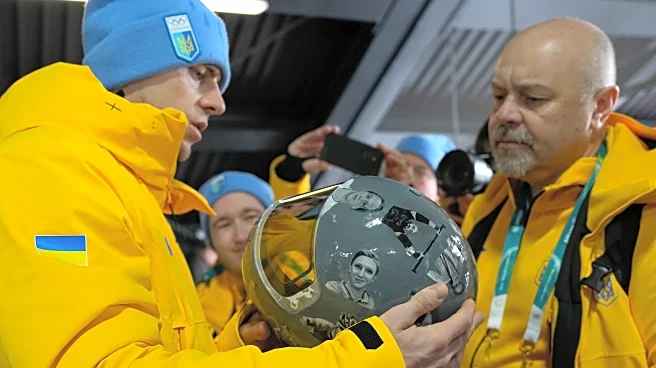
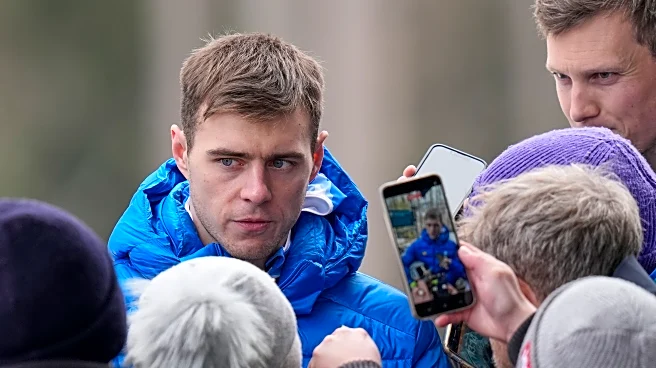
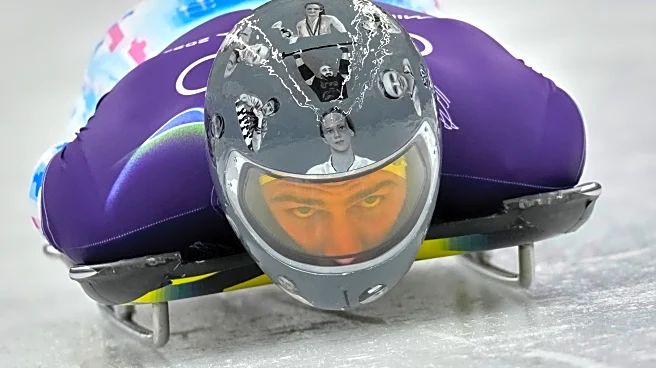
Ukrainian skeleton athlete Vladyslav Heraskevych has been barred from competing in the Winter Olympics due to his helmet, which honors over 20 Ukrainian athletes and coaches killed in the war with Russia.
The International Olympic Committee (IOC) ruled that the helmet violated their guidelines against political statements on the Olympic field. Despite the IOC's decision, Heraskevych wore the helmet during training, knowing it could lead to his disqualification. The IOC had previously supported Heraskevych when he displayed a 'No war in Ukraine' sign at the 2022 Beijing Olympics, interpreting it as a call for peace. However, in this instance, the IOC emphasized that the issue was not the message itself but the venue where it was expressed.
Why It's Important?
This decision highlights the ongoing tension between sports and political expression, particularly in the context of international conflicts. The IOC's ruling underscores the challenges athletes face when attempting to use their platform to make political statements. The ban could impact Heraskevych's career and raises questions about the balance between freedom of expression and adherence to international sports regulations. The situation also reflects broader geopolitical tensions, as the war in Ukraine continues to influence global events, including the Olympics.
What's Next?
Heraskevych plans to appeal the decision to the Court of Arbitration for Sport, seeking to overturn the IOC's ruling. The outcome of this appeal could set a precedent for how political expressions are handled in future Olympic events. The IOC may also face increased scrutiny and pressure to clarify its policies on political statements, potentially leading to policy revisions. Stakeholders, including athletes, sports organizations, and political leaders, will likely continue to debate the role of political expression in sports.