





What's Happening?
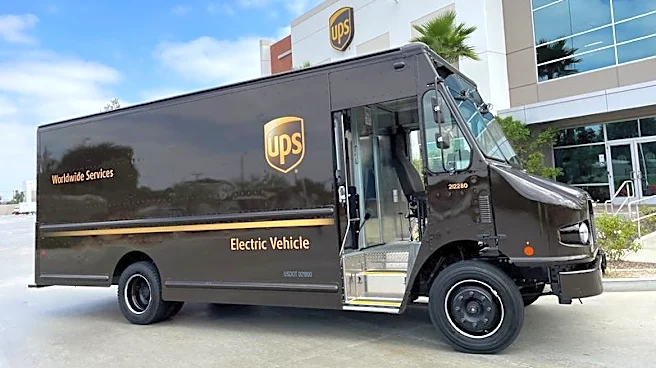
FedEx and UPS have announced plans to refund customers following a Supreme Court decision that could lead to billions of dollars in reimbursements related to tariffs imposed during President Trump's administration. The ruling found that the 1977 International
Emergency Economic Powers Act (IEEPA) did not authorize the imposition of these tariffs, which were applied to goods from major trading partners. As a result, the federal government has begun processing refund claims for duties collected under this act. UPS CEO Carol Tomé stated that the company processed 16 million IEEPA-related entries and remitted over $5 billion in tariffs to the U.S. Treasury. Both FedEx and UPS have committed to returning any recovered funds to their customers, emphasizing their role as intermediaries in tariff collection.
Why It's Important?
The Supreme Court's decision to invalidate tariffs imposed under the IEEPA has significant implications for U.S. businesses and international trade. The potential refund of approximately $166 billion in tariff collections could provide financial relief to thousands of companies affected by these duties. This development underscores the broader economic impact of the tariffs, which disrupted global trade and affected corporate earnings across various industries. For logistics companies like FedEx and UPS, the refunds are not expected to materially impact their financial results, as they primarily act as intermediaries. However, the scale of the refunds highlights the economic significance of the tariffs and the potential for future trade policy adjustments.
What's Next?
The federal government has launched a phased refund system, allowing importers and brokers to submit claims through an online portal. Most valid refunds are expected to be issued within 60 to 90 days after approval, although more complex cases may take longer. While the court ruling struck down tariffs imposed under the IEEPA, other trade measures remain in place, and officials have indicated that additional duties could still be pursued under alternative legal authorities. The logistics industry and affected businesses will be closely monitoring the refund process and any further developments in trade policy.