


What's Happening?
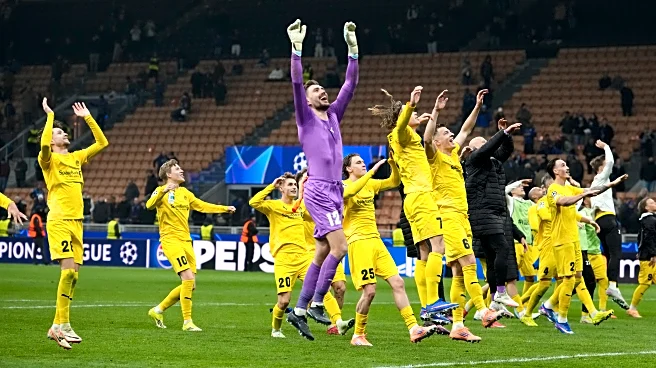
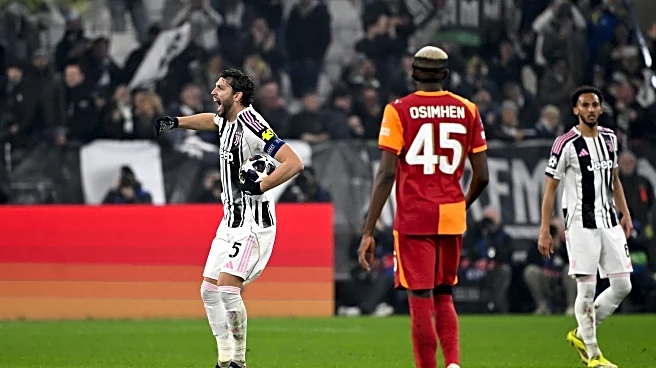
Juventus has been eliminated from the Champions League after a 7-5 aggregate loss to Galatasaray in the playoff round. Despite a strong effort in the second leg, including goals from Weston McKennie and Federico Gatti, Juventus could not overcome the deficit
from the first leg. The team played with ten men for most of the match following a red card to Lloyd Kelly. This exit is part of a broader trend of Italian football clubs struggling in European competitions, with Atalanta being the only Serie A team to reach the last 16 of the Champions League. Other Italian clubs like Inter Milan and Napoli have also faced early exits, raising concerns about the quality and competitiveness of Serie A teams on the European stage.
Why It's Important?
The elimination of Juventus from the Champions League underscores significant challenges facing Italian football. Serie A clubs have been unable to match the pace and intensity of their European counterparts, which is reflected in their early exits from major tournaments. This situation highlights issues such as the reliance on older players, a lack of investment in young talent, and tactical stagnation. The struggles of Italian clubs in Europe could impact the league's reputation and financial standing, as success in international competitions often translates to increased revenue and global recognition. The current state of Italian football may necessitate strategic changes to regain competitiveness.
What's Next?
Italian football may need to undergo significant changes to address its current challenges. Clubs might focus on developing young talent and investing in infrastructure to improve competitiveness. There could also be a push for tactical innovation and a reevaluation of player recruitment strategies. The Italian national team's need to qualify for the World Cup through playoffs further emphasizes the urgency for reform. Stakeholders in Italian football, including club owners and the national federation, may need to collaborate on long-term strategies to enhance the league's standing in Europe and globally.
Beyond the Headlines
The struggles of Italian football clubs in Europe may have deeper implications for the sport in Italy. The reliance on older players and lack of youth development could affect the national team's future performance. Additionally, the financial implications of early exits from European competitions could impact club revenues and their ability to attract top talent. The situation may also prompt discussions about the need for modernizing stadiums and improving matchday experiences to boost fan engagement and revenue. These challenges highlight the need for a comprehensive approach to revitalize Italian football.