







What's Happening?
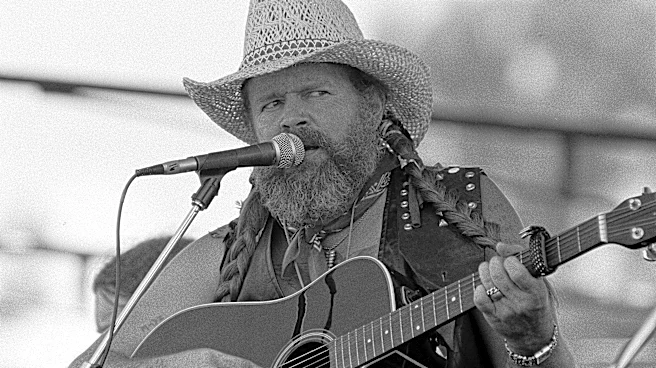
David Allan Coe, a prominent figure in the outlaw country music scene, has died at the age of 86. His death was confirmed by his wife, Kimberly Hastings Coe, who described him as one of the best singers and songwriters of his time. Coe was known for his raw
and often controversial lyrics, as well as his outsider status in Nashville's music establishment. He wrote several hit songs, including 'Take This Job and Shove It' and 'Would You Lay With Me (in a Field of Stone)'. Despite his success, Coe's career was marked by controversy, particularly due to two R-rated albums he released in the late 1970s and early 1980s, which were criticized for their explicit content. Coe's life was also characterized by a checkered past, including time spent in prison and associations with biker gangs.
Why It's Important?
David Allan Coe's death marks the end of an era for the outlaw country music genre, which he helped define alongside other legendary artists. His music, often reflecting themes of rebellion and nonconformity, resonated with a diverse audience and influenced many musicians. However, his controversial lyrics and personal history have sparked debates about the boundaries of artistic expression and the responsibilities of public figures. Coe's legacy is a complex one, highlighting the tension between artistic freedom and social accountability. His passing may prompt renewed discussions about the impact of controversial art on society and the music industry.
What's Next?
In the wake of Coe's death, there may be increased interest in his music and life story, potentially leading to a resurgence in the popularity of his work. A documentary about Coe, which has been in development, could provide further insights into his life and career, offering a more nuanced understanding of his contributions to music and culture. Additionally, his passing may inspire tributes and retrospectives from fellow musicians and fans, celebrating his influence on the country music genre.
Beyond the Headlines
David Allan Coe's life and career raise important questions about the role of controversy in art and the music industry. His willingness to push boundaries and challenge norms made him a polarizing figure, but also a significant cultural icon. The ethical implications of his work, particularly regarding the explicit content of some of his songs, continue to be relevant in discussions about censorship and artistic expression. Coe's story also highlights the potential for personal redemption and transformation, as he navigated a tumultuous life marked by both success and scandal.