




What's Happening?
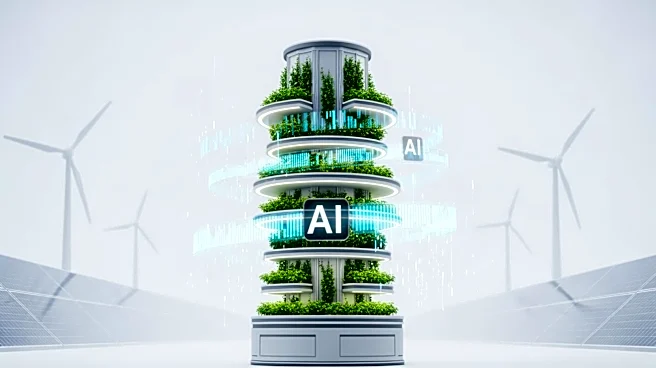
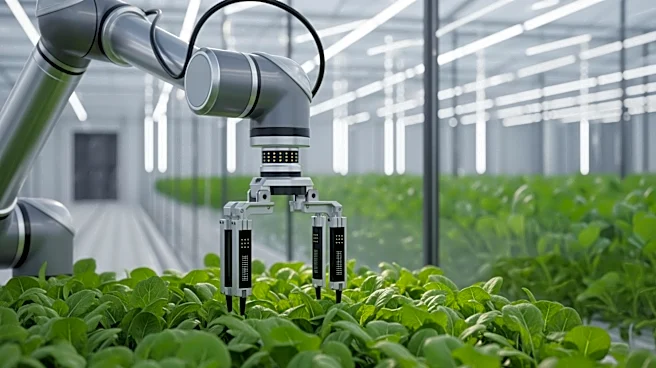
The vertical farming market is expected to grow significantly, reaching USD 75.9 billion by 2035, according to Dimension Market Research. This growth is driven by the integration of AI-driven automation and renewable energy, which are reducing operational
costs by up to 30%. Vertical farming, which uses techniques like hydroponics, aeroponics, and LED lighting, offers a sustainable alternative to traditional farming by using up to 95% less water and eliminating the need for chemical pesticides. The market is dominated by building-based vertical farms, which account for 61% of the market share, while shipping-container farms are gaining popularity due to their modularity and lower entry costs.
Why It's Important?
The expansion of vertical farming is significant as it addresses urban food security, climate resilience, and sustainable production. By reducing water usage and eliminating pesticides, vertical farming offers an environmentally friendly solution to meet the growing demand for food in urban areas. The integration of AI and renewable energy not only makes vertical farming more cost-effective but also positions it as a viable competitor to traditional agriculture. This shift could lead to a transformation in how food is produced and distributed, potentially reducing the carbon footprint associated with food transportation and supporting local economies.
What's Next?
As vertical farming continues to grow, further advancements in AI and renewable energy integration are expected to enhance efficiency and reduce costs. The market is likely to see increased investment from major retailers and agritech firms, as well as support from government initiatives promoting smart farming. The focus will be on expanding vertical farming operations in urban areas, particularly in regions facing water scarcity and food supply challenges. The development of new technologies and business models will be crucial in determining which companies emerge as leaders in this rapidly evolving market.