






What's Happening?
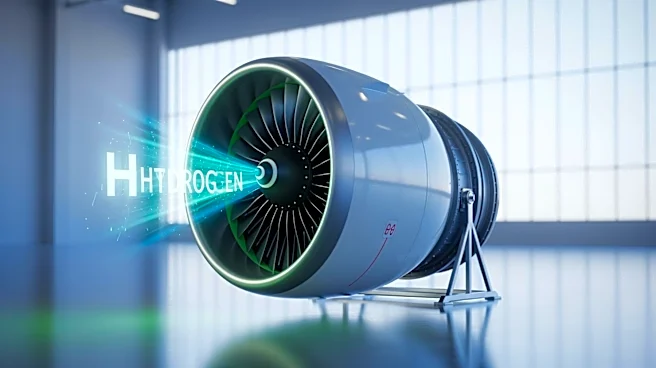
easyJet and Rolls-Royce have completed a significant phase in testing hydrogen as an aviation fuel, marking progress in reducing emissions in air transport. The test involved a modified Rolls-Royce Pearl 15 engine running on 100% hydrogen, achieving full
take-off power at NASA's Stennis Space Center in Mississippi. This test is part of a four-year collaboration aimed at exploring hydrogen's potential in future propulsion systems, particularly for narrowbody aircraft. The program has gradually developed, with initial tests in the UK and Germany, leading to the latest phase integrating the hydrogen system into a demonstrator engine. The test represents a step towards easyJet's goal of net zero emissions by 2050.
Why It's Important?
The successful test of a hydrogen-powered aircraft engine by easyJet and Rolls-Royce is a crucial development in the aviation industry's efforts to reduce carbon emissions. Hydrogen, as a clean energy source, could significantly lower the environmental impact of air travel, which is a major contributor to global emissions. This advancement not only supports the aviation sector's sustainability goals but also aligns with broader global efforts to combat climate change. The knowledge gained from this program could accelerate the adoption of hydrogen technology in commercial aviation, potentially transforming the industry and setting new standards for environmental responsibility.
What's Next?
While hydrogen is not yet an immediate solution for commercial aviation, the successful test indicates that the technology is moving from theoretical research to practical demonstrations. Future steps will likely involve further testing and refinement of hydrogen propulsion systems, with a focus on safety, efficiency, and integration into existing aircraft designs. Stakeholders in the aviation industry, including airlines, manufacturers, and regulatory bodies, will need to collaborate to address challenges such as infrastructure development and regulatory approval. The continued advancement of hydrogen technology could lead to its eventual adoption as a mainstream fuel source in aviation, contributing to long-term emission reduction goals.