



What's Happening?
The global agricultural tractors market is anticipated to grow from USD 65 billion in 2025 to USD 119 billion by 2035, reflecting a compound annual growth rate (CAGR) of 6.2%. This growth is driven by increased mechanization, the adoption of precision
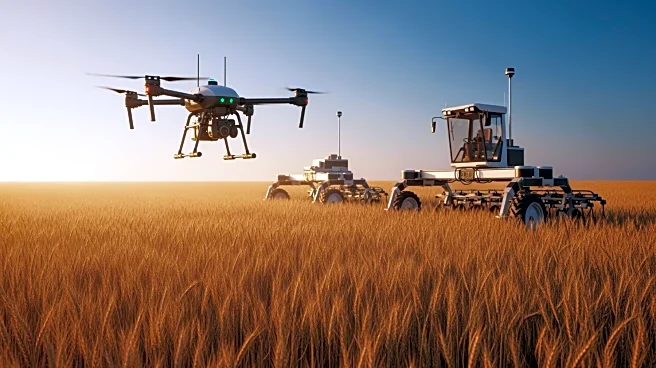
agriculture technologies, and investments in rural infrastructure. The demand for tractors is closely linked to macroeconomic indicators such as agricultural GDP growth and farm income levels. Mechanization is a key growth driver, with modern tractors improving efficiency and reducing fuel consumption. The market is also seeing a rise in electric and semi-autonomous tractors, which are gaining popularity due to their sustainability and efficiency benefits.
Why It's Important?
The expansion of the agricultural tractors market is significant for the global agricultural sector, as it supports increased productivity and efficiency in farming operations. The adoption of advanced technologies such as GPS-guided steering and IoT-enabled systems is transforming traditional farming practices, leading to better yield predictability and reduced labor dependency. This growth also indicates a shift towards more sustainable farming practices, with electric tractors reducing fuel costs and emissions. The market's growth is expected to benefit stakeholders across the agricultural supply chain, including manufacturers, farmers, and technology providers.
What's Next?
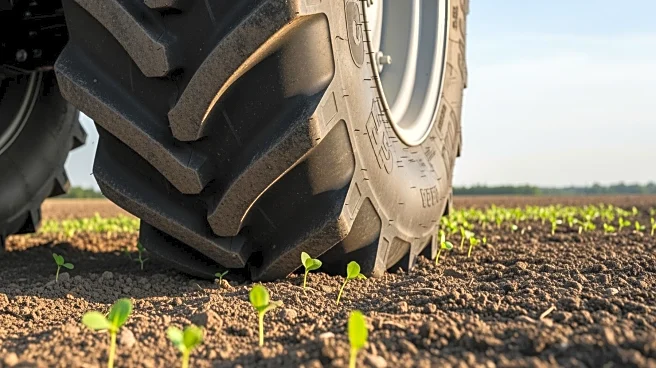
As the market continues to grow, stakeholders will need to align production planning and inventory management with macroeconomic indicators to maintain supply-demand equilibrium. The increasing adoption of electric and semi-autonomous tractors suggests a trend towards more sustainable and efficient farming practices. Additionally, strategic partnerships between tire producers and original equipment manufacturers (OEMs) are expected to strengthen production capacity and supply chain resilience. The market's growth will likely be supported by government subsidies and incentive programs, particularly in regions like Asia Pacific, where mechanization is rapidly expanding.