







What's Happening?
Samsung Electronics has announced that its Taylor fab in Texas is set to begin mass production next year. Margaret Han, vice president at Samsung Electronics' US foundry business, confirmed this development at the SAFE Forum held at Samsung's US office.
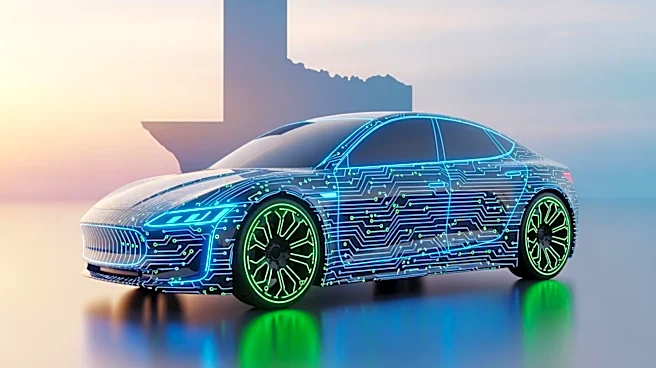
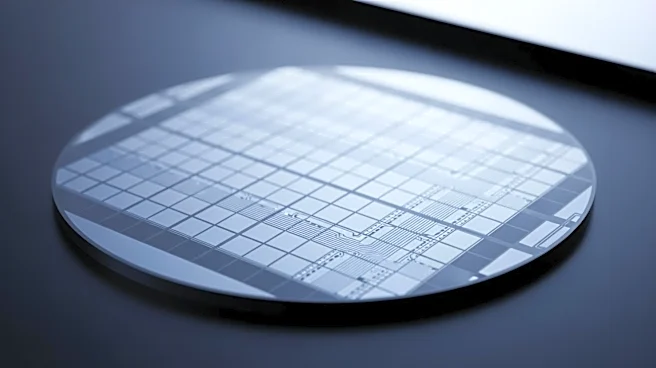
The facility, which began construction in 2022, represents a $17 billion investment and is expected to manufacture Tesla's AI5 and AI6 autonomous driving chips. Additionally, Samsung plans to introduce advanced 2-nanometer process technology at the site, aiming to enhance long-term production capacity. The Taylor fab will deploy the SF2P+ process, which is part of Samsung's 2-nanometer family, including SF2, SF2P, SF2P+, and SF2X, targeting AI and high-performance computing applications.
Why It's Important?
The commencement of mass production at Samsung's Taylor fab is a significant development for the semiconductor industry in the United States. This facility will bolster domestic chip manufacturing capabilities, which is crucial given the global semiconductor shortage and the increasing demand for advanced chips in AI and autonomous driving technologies. The introduction of 2-nanometer process technology at the Taylor fab positions Samsung as a leader in cutting-edge semiconductor manufacturing, potentially enhancing the competitiveness of U.S.-based tech companies. This move could also stimulate economic growth in Texas, creating jobs and attracting further investments in the region.
What's Next?
Samsung plans to share more details about its advanced process technologies with partners in July during another SAFE Forum at its Seocho headquarters. The company is also expected to hold its Samsung Foundry Forum (SFF) later in July, where it will present its foundry technology roadmap to partners. These events will serve as platforms for Samsung to discuss technology trends and strengthen cooperation with its foundry partners across areas such as IP, design, and packaging. The successful deployment of the SF2P+ process at the Taylor fab could lead to further advancements in AI and high-performance computing applications.