





What's Happening?
The oil market has experienced significant volatility due to ongoing diplomatic tensions between the United States and Iran, coupled with fears surrounding the Strait of Hormuz blockade. Crude oil prices initially surged as traders reacted to potential
threats to global oil supplies, following reports that Iran's Supreme Leader ordered enriched uranium to remain in the country. This move was seen as complicating negotiations with the U.S., where President Trump has prioritized dismantling Iran's nuclear program. However, market sentiment shifted later as President Trump indicated a willingness to delay military action, suggesting diplomacy could still prevail. This led to a sharp reversal in oil prices, highlighting the market's sensitivity to geopolitical developments.
Why It's Important?
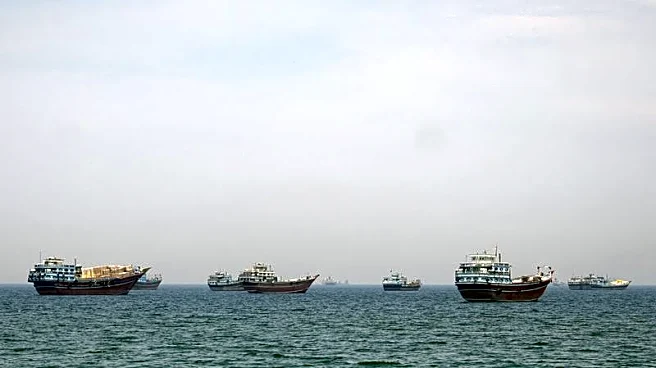
The Strait of Hormuz is a critical chokepoint for global oil transportation, and any disruption can have far-reaching impacts on oil prices and supply chains. The volatility in oil prices reflects the market's reaction to geopolitical risks and the potential for supply disruptions. A prolonged blockade or escalation in tensions could lead to higher oil prices, affecting global energy markets and economic stability. Conversely, a diplomatic resolution could ease supply concerns and stabilize prices. The situation underscores the interconnectedness of geopolitical events and global energy markets, with implications for energy policy, trade, and economic growth.
What's Next?
The outlook for the oil market remains uncertain, with potential for continued volatility. A breakthrough in U.S.-Iran negotiations could reduce geopolitical risk premiums and lead to a stabilization of oil prices. However, unresolved supply disruptions and tight inventories, as highlighted by the International Energy Agency, could maintain upward pressure on prices. Traders and policymakers will be closely monitoring developments, as the balance between diplomatic efforts and physical supply risks will shape market dynamics. The potential for further disruptions in the Strait of Hormuz remains a key concern for global energy security.