



What's Happening?
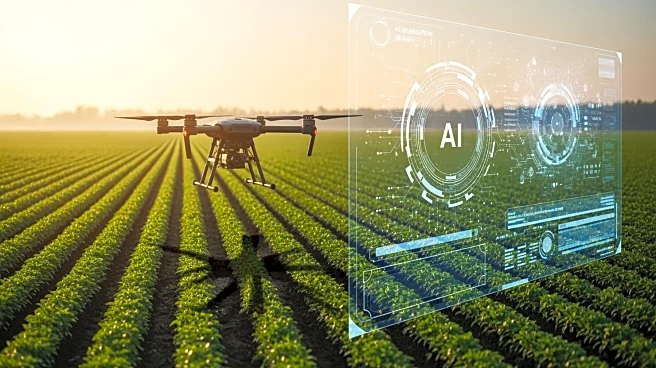
Artificial intelligence (AI) is increasingly being integrated into agriculture, primarily to support decision-making rather than replace human labor. AI technologies are used for monitoring and optimizing various farming processes, such as detecting crop stress and predicting irrigation needs. However, the adoption of AI in agriculture raises concerns about who bears the risks when technology fails. While AI can enhance productivity, it also shifts the burden of risk onto farmers, who must manage the consequences of any technological failures. The focus is on ensuring that AI systems are designed to support human judgment and accountability.
Why It's Important?
The integration of AI into agriculture has the potential to significantly increase productivity and efficiency,
addressing the growing global demand for food. However, the uneven adoption of AI technologies and the associated risks highlight the need for careful management and oversight. Farmers, particularly those with limited resources, may face increased exposure to risk if AI systems are not designed with shared accountability in mind. Ensuring that AI supports rather than undermines human decision-making is crucial for the sustainable and equitable advancement of agricultural practices.
What's Next?
As AI continues to reshape agriculture, the industry will need to focus on developing systems that balance productivity gains with risk management. This includes creating AI technologies that enhance human judgment and accountability, as well as ensuring equitable access to these tools across different farming operations. Policymakers and industry leaders may need to collaborate to establish guidelines and standards that protect farmers and promote the responsible use of AI in agriculture. The goal is to create a future where AI contributes to a more resilient and sustainable agricultural sector.