


What's Happening?
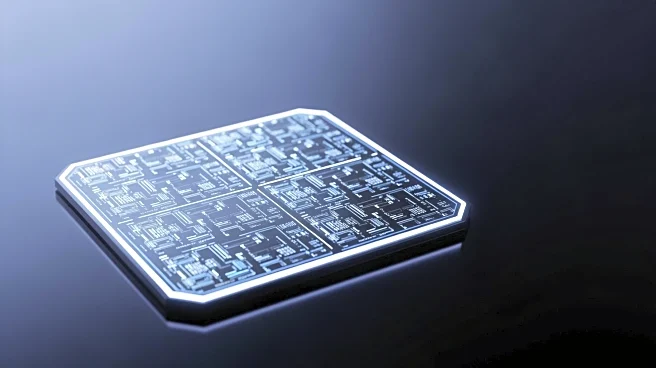
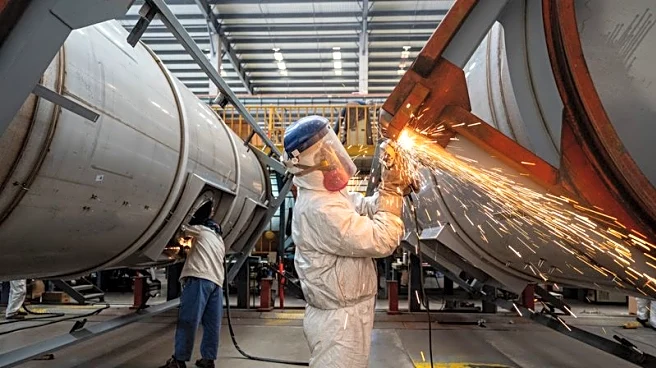
Micron Technology, a leading semiconductor company headquartered in Boise, Idaho, is expanding its operations with a significant new project in central New York. This expansion involves the construction of four new fabrication plants, each the size of ten
football fields, as part of a strategy to navigate the complex international trade and tariff landscape. Founded in 1978, Micron has grown from a small operation in a dentist's basement to a major player in the global semiconductor industry. The company has a history of overcoming challenges, including competition from Japanese manufacturers in the 1980s and navigating the cyclical nature of the semiconductor market. Micron's expansion is supported by the 2022 CHIPS and Science Act, which aims to bolster U.S.-based semiconductor production.
Why It's Important?
Micron's expansion is crucial for the U.S. semiconductor industry, which is facing a global supply chain crisis. By increasing domestic production capacity, Micron aims to reduce reliance on foreign manufacturers and strengthen the U.S. position in the global semiconductor market. This move is expected to create jobs and stimulate economic growth in the regions where new plants are being built. Additionally, the expansion aligns with national security interests by ensuring a stable supply of critical technology components. The CHIPS and Science Act's support underscores the strategic importance of semiconductors in the U.S. economy and national security.
What's Next?
Micron's new fabrication plants in New York are part of a long-term strategy to enhance U.S. semiconductor production. The company also plans to build additional facilities in Idaho, further increasing its domestic manufacturing capabilities. However, these projects will take time to complete, and the current global memory supply crisis is expected to persist until at least 2027. Micron's acquisition of a chip foundry in Taiwan for $1.8 billion is another step towards addressing supply chain challenges, although its impact will not be felt immediately. The company's efforts are part of a broader industry trend towards reshoring semiconductor manufacturing to mitigate future disruptions.