
What's Happening?
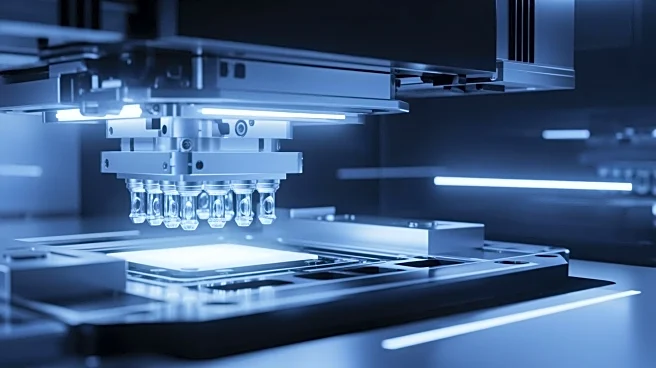
ASML, a leading semiconductor equipment manufacturer, has announced that its next-generation High-NA EUV lithography machines are now ready for volume production. These advanced machines, priced at approximately $400 million each, are designed to enhance
chip manufacturing efficiency by eliminating several costly steps. Despite this technological milestone, ASML's shares fell by over 4% due to broader market concerns and profit-taking. The company reported strong financial results for 2025, with a revenue of €32.7 billion and a net profit of €9.6 billion. However, the market reaction was influenced by a sector-wide rotation following Nvidia's earnings report, which led investors to shift capital from semiconductor stocks to software stocks.
Why It's Important?
The readiness of ASML's High-NA EUV machines marks a significant advancement in semiconductor manufacturing, potentially benefiting major clients like TSMC and Intel by enabling the production of more powerful and efficient chips. This development is crucial for the semiconductor industry, which is facing challenges such as rare earth element shortages. However, the decline in ASML's stock highlights the volatility in the semiconductor market, influenced by broader economic factors and investor sentiment. The shift in investment from semiconductor to software stocks indicates changing market dynamics, which could impact future investments and growth in the semiconductor sector.
What's Next?
ASML plans to increase the operational availability of its High-NA EUV systems to 90% by the end of 2026. Full integration of these machines into customer production lines is expected to take two to three years. The company also forecasts a decline in its business in China, which is expected to account for about 20% of sales in 2026. This could affect short-term growth expectations, but the successful development of High-NA technology positions ASML as a key supplier for next-generation AI chips. Investors and industry stakeholders will likely monitor ASML's progress in integrating these machines and its performance in the Chinese market.