
What's Happening?
Rayhaan Kabenge, a graduate research assistant at Kansas State University, is leading the development of advanced digital tools designed to assist farmers in making informed decisions. As part of the Testing
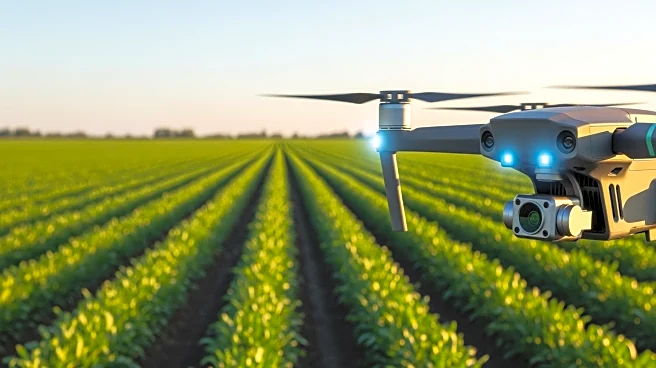
Ag Performance Solutions (TAPS) team, Kabenge is working on a web-based dashboard called the TAPS Decision Support Suite. This tool integrates various data sources, including weather data, soil moisture readings, and drone imagery, to provide farmers with clear, actionable insights. The dashboard's AI-powered interpretation tool translates complex analytics into understandable language, bridging the gap between technical analysis and practical decision-making. Kabenge's work is informed by his background in engineering and his experiences in Uganda, where he initially developed an interest in using technology to improve agricultural practices.
Why It's Important?
The development of AI tools for agriculture is significant as it addresses the growing need for precision in farming practices. By providing farmers with tools that simplify complex data, the TAPS Decision Support Suite can enhance productivity and sustainability in agriculture. This innovation is particularly crucial as it allows farmers to make data-driven decisions without requiring deep technical expertise. The potential impact extends beyond Kansas, as these tools could be adapted for use in diverse agricultural settings globally, promoting efficiency and environmental sustainability. The integration of AI in agriculture represents a shift towards more technologically advanced farming practices, which could lead to increased yields and better resource management.
What's Next?
Kabenge aims to expand the reach of the tools developed at Kansas State University to support farmers worldwide. The ongoing advancements in AI technology suggest that these tools will continue to evolve, offering even more sophisticated solutions for agricultural challenges. As the TAPS program continues to engage with producers, it is likely that further refinements and adaptations of the tools will occur, ensuring they meet the specific needs of different farming communities. The success of these tools could inspire similar initiatives in other regions, fostering a global movement towards smarter, more precise agriculture.