





What's Happening?
Thermo Fisher Scientific has announced the expansion of its Orbitrap mass spectrometry platforms at the American Society for Mass Spectrometry (ASMS) Conference 2026. The company introduced three new high-resolution mass spectrometry platforms designed
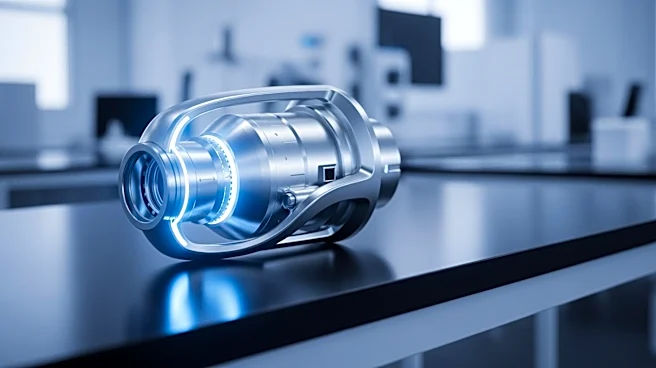
to improve decision-making across research, biopharmaceutical, and applied markets. These platforms include the Thermo Scientific Orbitrap Tribrid Apex Mass Spectrometer, the Orbitrap Excedion Mass Spectrometer, and the Orbitrap Exploris GC S Mass Spectrometer. The new technologies aim to provide deeper insights, more reliable results, and faster interpretation through AI-enabled software and integrated workflows. These innovations are expected to support laboratories in advancing discoveries, accelerating drug development, and ensuring more confident testing for food, air, and water safety.
Why It's Important?
The introduction of these advanced mass spectrometry platforms by Thermo Fisher Scientific is significant for several reasons. Firstly, it addresses the growing complexity of scientific research and the need for more precise and reliable data. By enhancing the capabilities of laboratories to analyze complex samples and deliver faster results, these innovations can accelerate the development of new medicines and improve public health safety. Additionally, the ability to detect emerging contaminants more efficiently is crucial for environmental and food safety, potentially leading to more proactive public health decisions. The integration of AI-enabled software further streamlines the analysis process, reducing the time and resources required for complex data interpretation.
What's Next?
As these new platforms are integrated into laboratories, it is expected that there will be a significant impact on the speed and accuracy of scientific research and testing. Laboratories may begin to adopt these technologies to enhance their capabilities in drug development and environmental testing. The broader scientific community will likely monitor the performance and outcomes of these new systems to assess their effectiveness in real-world applications. Additionally, regulatory bodies may consider the implications of these advanced technologies on current testing standards and protocols, potentially leading to updates in regulatory requirements.
Beyond the Headlines
The expansion of Thermo Fisher's Orbitrap platforms also highlights the increasing role of AI and machine learning in scientific research. The integration of AI-driven proteomics and machine learning expertise into these platforms represents a shift towards more automated and intelligent data analysis processes. This could lead to a transformation in how laboratories approach complex scientific challenges, potentially reducing human error and increasing the reproducibility of results. Furthermore, the focus on regulatory-ready results underscores the importance of compliance and accuracy in scientific testing, particularly in fields with significant public health implications.