


What's Happening?
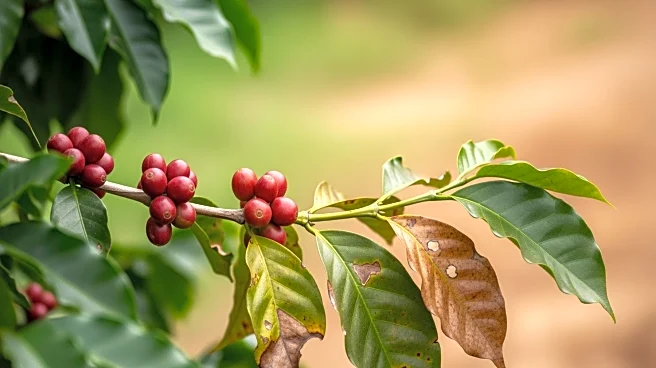
Climate change is significantly impacting coffee production, particularly affecting Arabica coffee, which is highly sensitive to temperature changes. As global temperatures rise, traditional Arabica-growing regions are becoming less suitable, with around
8% already deemed climatically unsuitable, a figure that could rise to 20% by 2050. This has led to disruptions in bean development, resulting in lower yields and quality. In response, farmers are adopting new strategies such as irrigation, shade trees, and improved coffee varieties to manage climate stress. Meanwhile, Robusta coffee, which is more tolerant of heat and drought, is expanding into warmer, lower-altitude regions, particularly in Brazil. This shift is supported by advancements in irrigation and mechanization, making Robusta a potential stabilizing force in the global coffee market.
Why It's Important?
The changes in coffee production due to climate change have significant implications for the global coffee market and consumers. Arabica coffee, known for its superior taste, faces increased production costs and volatility, which could lead to higher prices for consumers. The shift towards Robusta, while stabilizing supply, may alter the flavor profiles available to consumers. Additionally, the increased costs associated with climate adaptation measures and regulatory requirements, such as the European Union Deforestation Regulation, are likely to drive up production costs further. This could impact the affordability and accessibility of coffee, a staple beverage worldwide. The coffee industry must adapt to these changes to ensure sustainability and meet consumer demand.
What's Next?
As climate change continues to alter growing conditions, coffee producers will need to invest in long-term strategies to adapt. This includes developing more resilient coffee varieties and expanding production into new regions. The industry may also see increased investment in coffee alternatives, which could provide a buffer against supply volatility. However, traditional coffee is expected to remain a staple, with consumers unlikely to abandon their daily rituals despite potential price increases. The focus will likely be on balancing sustainability with consumer preferences, ensuring that coffee remains a viable and accessible product in the future.
Beyond the Headlines
The shift in coffee production due to climate change also raises ethical and environmental considerations. The expansion of coffee growing into new regions must be managed carefully to avoid deforestation and biodiversity loss. Additionally, the reliance on irrigation and mechanization could have environmental impacts, such as increased water usage and carbon emissions. The industry must navigate these challenges while maintaining ethical sourcing practices and supporting the livelihoods of coffee farmers, many of whom are in developing countries and vulnerable to climate impacts.