






What's Happening?
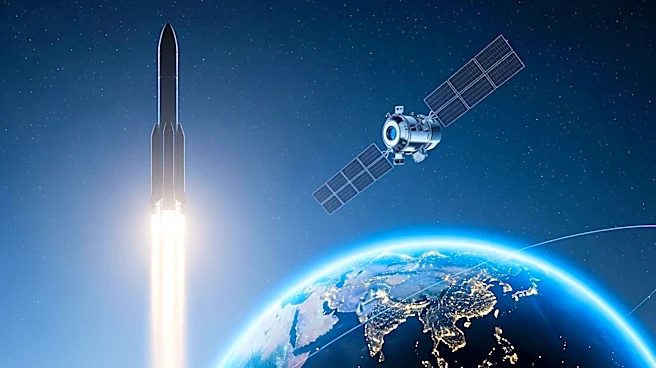
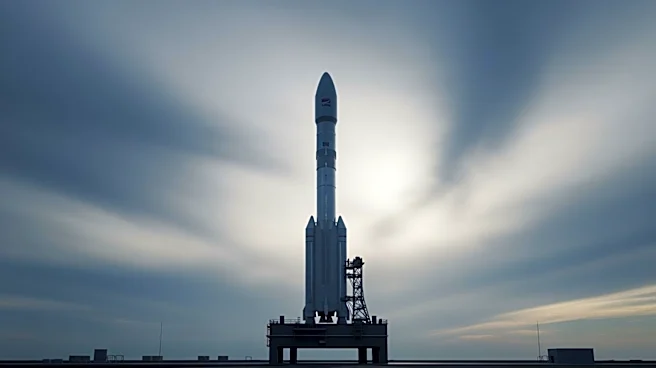
SpaceX's Falcon Heavy rocket successfully launched for the first time in 18 months on April 29, 2026, from NASA's Kennedy Space Center in Florida. The mission carried the ViaSat-3 F3 communications satellite to geosynchronous transfer orbit. This launch was
notable not only for its payload but also because it was observed by a BlackSky Gen-3 Earth-observing satellite. The satellite captured images of the Falcon Heavy both on the launch pad and during its ascent. BlackSky's Gen-3 satellites, which are part of a growing constellation in low Earth orbit, are equipped with advanced imaging capabilities that allow them to capture detailed images of objects as small as 13.8 inches on the ground. The Falcon Heavy, known for being the second-most-powerful operational rocket, has now completed 12 successful flights since its debut in February 2018.
Why It's Important?
The successful launch of the Falcon Heavy is significant for several reasons. It underscores SpaceX's continued leadership in the commercial space industry, particularly in launching heavy payloads. The deployment of the ViaSat-3 F3 satellite is crucial for expanding global communications infrastructure, potentially enhancing internet connectivity worldwide. Additionally, the involvement of BlackSky's satellite in capturing the launch highlights the growing role of Earth-observing technologies in monitoring and documenting space activities. This capability can provide valuable data for both commercial and governmental applications, including environmental monitoring and national security.
What's Next?
Following this successful launch, SpaceX is likely to continue its aggressive launch schedule, which includes deploying more satellites for its Starlink internet constellation and other commercial clients. The completion of the ViaSat-3 constellation could lead to improved global internet services, particularly in underserved regions. Meanwhile, BlackSky is expected to expand its Gen-3 satellite constellation, enhancing its ability to provide real-time Earth observation data. This expansion could lead to new partnerships and applications in various sectors, including agriculture, disaster response, and urban planning.
Beyond the Headlines
The collaboration between SpaceX and companies like BlackSky reflects a broader trend in the space industry towards increased commercialization and privatization. This shift is driving innovation and reducing costs, making space more accessible to a wider range of stakeholders. However, it also raises questions about space traffic management and the sustainability of low Earth orbit, as the number of satellites continues to grow. Ensuring the long-term viability of space activities will require international cooperation and the development of new regulatory frameworks.