
What's Happening?
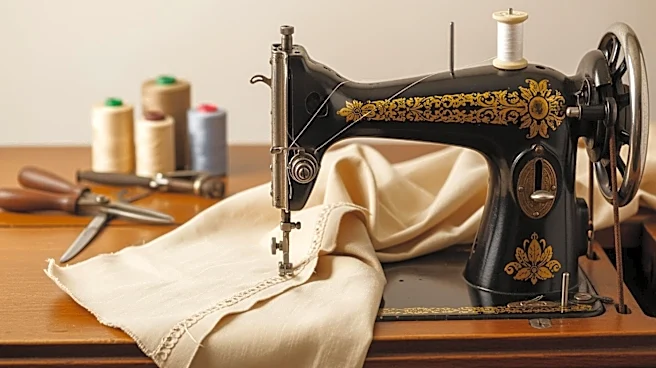
In New York, tailors like Kil Bae are experiencing a surge in demand for custom alterations, driven by consumers seeking personalized fits for off-the-rack clothing and secondhand finds. Despite this increased
demand, the profession is facing a significant decline in workforce numbers. Kil Bae, who began his tailoring career at 17 in South Korea, is now part of a dwindling group of professional sewers, dressmakers, and tailors in the U.S. The U.S. Bureau of Labor Statistics reported a 30% decrease in the number of tailors over the past decade, with fewer than 17,000 currently employed nationwide. The fashion industry is attempting to address this shortage by training new tailors, as seen in Nordstrom's collaboration with the Fashion Institute of Technology to offer advanced sewing programs.
Why It's Important?
The decline in the tailoring workforce comes at a time when demand for custom clothing alterations is rising, highlighting a gap between consumer needs and available skilled labor. This trend is significant for the fashion industry, which relies on tailors to provide personalized services that cannot be replicated by automation or artificial intelligence. The shortage of tailors could impact the ability of retailers to meet consumer expectations for custom fits, potentially affecting sales and customer satisfaction. Additionally, the profession's physical demands and relatively low wages may deter younger generations from entering the field, exacerbating the labor shortage.
What's Next?
To combat the workforce decline, the fashion industry is investing in training programs to cultivate a new generation of tailors. Nordstrom's partnership with the Fashion Institute of Technology is an example of efforts to provide hands-on training in advanced sewing techniques. As demand for tailoring services continues to grow, other retailers may follow suit, expanding their training initiatives to ensure a steady supply of skilled workers. The success of these programs could determine the future availability of tailoring services and influence the industry's ability to adapt to changing consumer preferences.
Beyond the Headlines
The tailoring profession's struggle to attract new workers raises broader questions about the value placed on skilled trades in the modern economy. As automation and AI continue to transform industries, the demand for human craftsmanship in tailoring underscores the importance of preserving traditional skills. This situation also highlights the need for better compensation and working conditions to make the profession more appealing to younger generations. The fashion industry's response to these challenges could set a precedent for other skilled trades facing similar workforce issues.