





What's Happening?
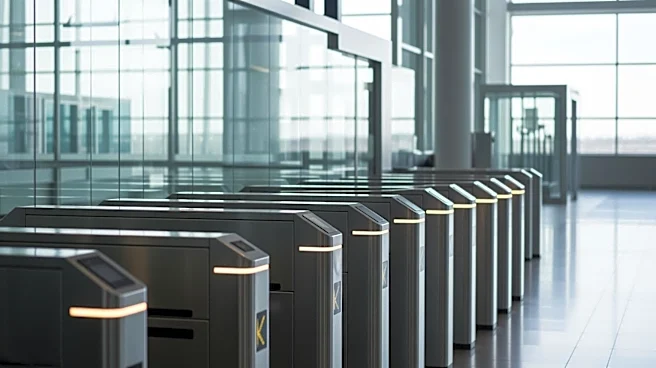
American Airlines is set to implement electronic boarding gates at Dallas Fort Worth International Airport (DFW) this summer, following a successful pilot program in November 2025. The airline aims to enhance the boarding experience by automating the process,
which includes the use of turnstiles that automatically validate boarding passes. This initiative is part of American Airlines' broader strategy to improve customer service and operational efficiency at its largest hub. The new system is designed to streamline manual tasks for staff, allowing them to focus on providing better customer service. Additionally, the turnstiles are expected to regulate the pace of boarding, thereby reducing congestion and improving the flow on jet bridges. While the system is primarily focused on queue management and access control, it does not address other boarding challenges such as limited overhead bin space and the handling of carry-on luggage.
Why It's Important?
The introduction of electronic boarding gates at DFW represents a significant shift in how airlines manage passenger flow and boarding processes. By automating these tasks, American Airlines hopes to reduce the need for human intervention, potentially lowering operational costs and improving efficiency. However, this move also raises concerns about the potential reduction in gate staff, which could impact customer service quality. The use of technology in boarding processes is part of a broader trend in the airline industry towards automation and digitalization. While this can lead to more efficient operations, it also poses challenges related to data privacy and the need for robust systems to handle exceptions and technical failures. The success of this initiative could influence other airlines to adopt similar technologies, potentially reshaping the future of air travel.
What's Next?
As American Airlines rolls out this new boarding technology, it will be important to monitor its impact on passenger experience and operational efficiency. The airline will need to address any technical issues that arise and ensure that the system is user-friendly for all passengers, including those traveling in groups or with special needs. Additionally, the airline will need to communicate clearly with passengers about the new process and any changes to boarding procedures. The broader adoption of such technologies could lead to further innovations in airport operations, but it will also require careful consideration of privacy and security concerns, particularly if biometric data is used in the future.