





What's Happening?
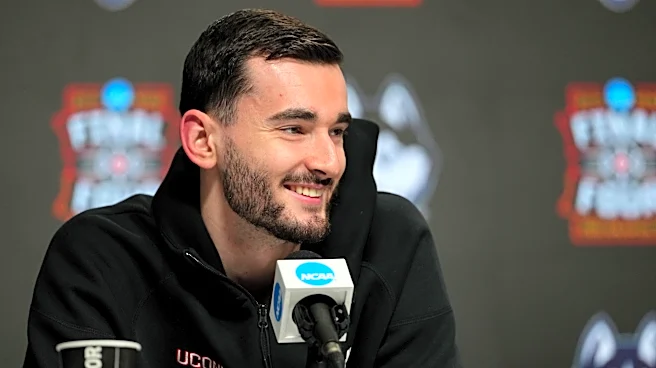
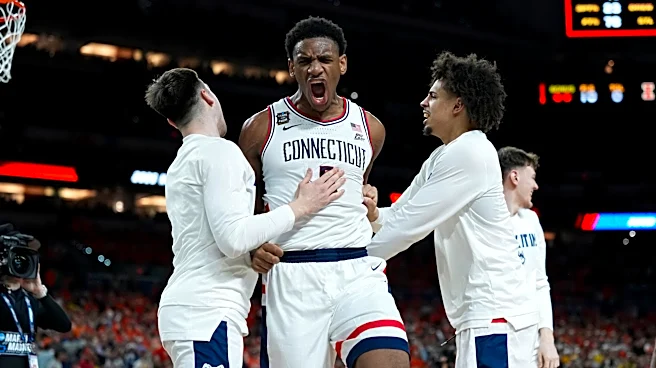
Tarris Reed, a prominent player for the University of Connecticut (UConn) Huskies, has played a significant role in leading his team to the 2026 NCAA Tournament's Final Four. Reed began his collegiate basketball career at the University of Michigan, where
he initially played as a bench player before securing a starting position in his sophomore year. Following the dismissal of Michigan's coach Juwan Howard, Reed transferred to UConn. At UConn, Reed initially returned to a bench role but eventually reclaimed a starting position, significantly contributing to the team's success. In his senior year, Reed averaged 14.7 points and 8.8 rebounds per game, earning him the Most Outstanding Player Award for the East All-Region Team. His performance in the tournament has also improved his prospects for the NBA draft.
Why It's Important?
Reed's transfer and subsequent performance highlight the impact of strategic player movements in college basketball, both for individual careers and team success. His journey underscores the importance of adaptability and perseverance in collegiate sports. For UConn, Reed's presence has been pivotal in their deep run in the NCAA Tournament, enhancing the team's reputation and potentially attracting future talent. For Reed, his improved performance and increased visibility during the tournament have elevated his NBA draft stock, showcasing how collegiate success can translate into professional opportunities. This case also reflects broader trends in college sports, where player transfers can significantly alter team dynamics and individual career trajectories.
What's Next?
As UConn continues its pursuit of a national championship, Reed's performance will be crucial. His rising draft stock suggests that he may soon transition to a professional basketball career, depending on his performance in the remaining tournament games and subsequent evaluations by NBA scouts. UConn will likely focus on leveraging this success to recruit new talent and maintain its competitive edge in future seasons. Reed's story may also influence other college athletes considering transfers, highlighting the potential benefits of such moves for career advancement.