






What's Happening?
The Georgia Bulldogs are evaluating potential changes to their offensive strategy for the 2026 college football season. Following the conclusion of spring practice, the team is focusing on summer training and addressing the loss of key receivers from
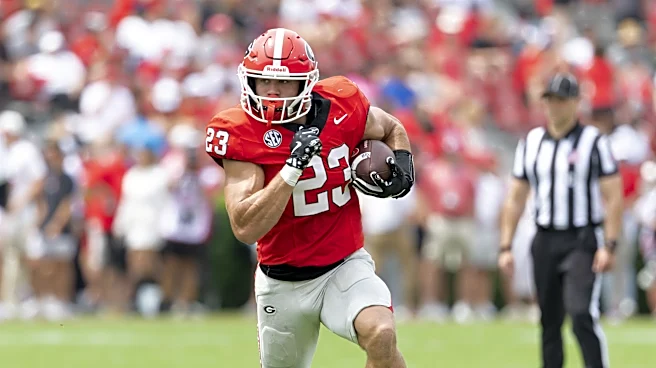
the previous season. With six of their seven leading receivers gone, including record-setter Zachariah Branch, the Bulldogs are exploring new approaches to maximize their offensive capabilities. The recent G-day scrimmage highlighted the depth in their tight end and running back positions, suggesting a possible shift in emphasis away from the wide receiver unit. Offensive coordinator Mike Bobo is known for adapting his strategies to leverage the strengths of his roster, and this season may see a greater focus on utilizing tight ends and running backs.
Why It's Important?
The potential shift in Georgia's offensive strategy underscores the dynamic nature of college football, where teams must continuously adapt to changes in personnel and competition. By focusing on their strengths in the tight end and running back positions, the Bulldogs aim to maintain their competitive edge despite significant roster changes. This strategic flexibility is crucial for sustaining success in a highly competitive environment. The decisions made by Georgia's coaching staff could serve as a model for other teams facing similar challenges, emphasizing the importance of adaptability and resourcefulness in collegiate sports.